When is rice harvest season in Ninh Binh?
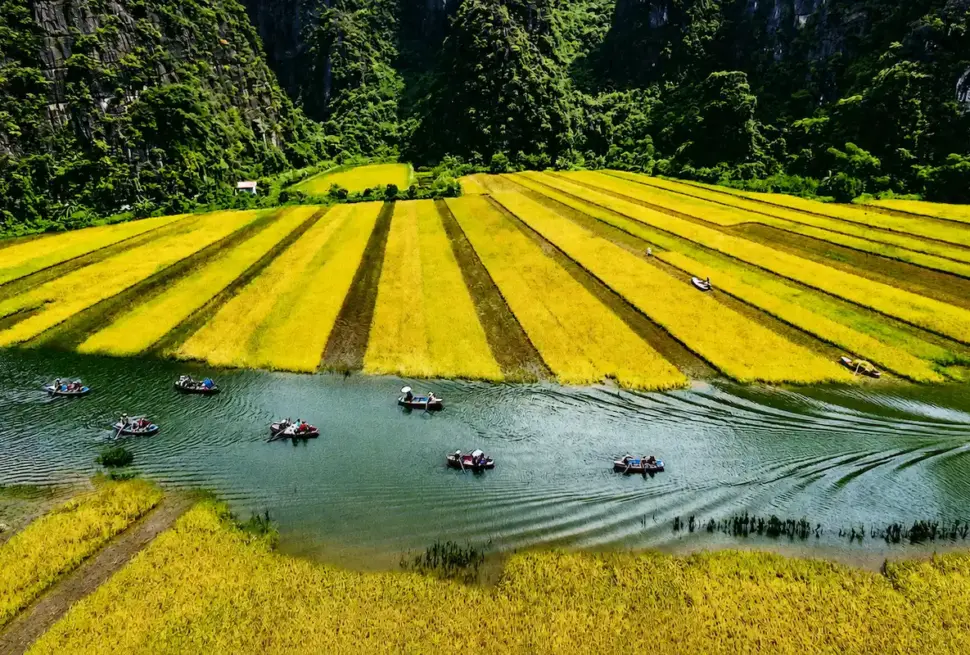
For travelers who want to see the famous golden rice fields of Tam Coc, the best period is generally from late May to early June. During these few weeks, the rice paddies along the Ngo Dong River turn from green to golden yellow, creating one of the most spectacular landscapes in northern Vietnam.
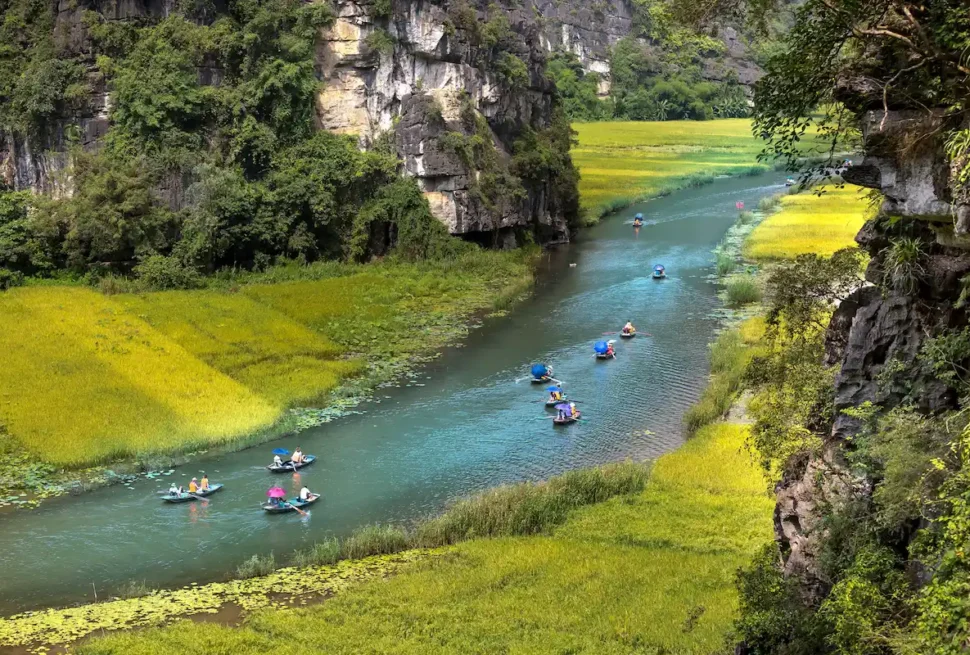
Ninh Binh is famous for its dramatic limestone mountains, winding rivers, ancient temples and peaceful countryside. But during rice season, the landscape changes completely. Golden fields stretch between towering karst cliffs, while traditional rowing boats pass quietly along the Ngo Dong River.
The sight is particularly beautiful in Tam Coc, making the area one of the most popular places in Vietnam for landscape photography and scenic boat trips. However, rice harvesting is seasonal, and the exact timing can vary from one year to another. Knowing when to visit can make a significant difference to your experience.
This guide explains when is rice harvest season in Ninh Binh, what the Tam Coc rice harvest looks like, the best time of day to visit, where to photograph the fields,
and how to plan your trip around the harvest.
When Is Rice Harvest Season in Ninh Binh?
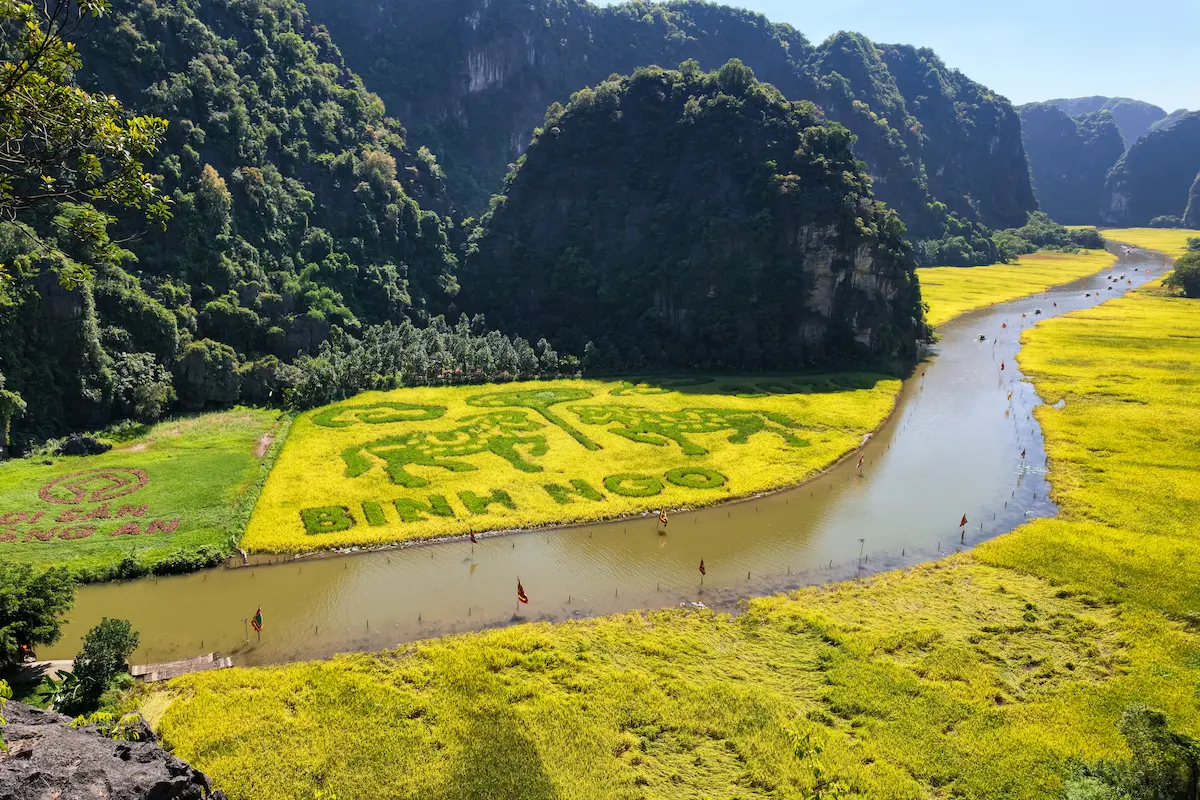
For the classic golden rice landscape in Tam Coc, the main viewing period is usually late May to early June. The fields gradually change from green to yellow as the rice ripens, and the most attractive golden scenery may last for only around two to three weeks.
The exact dates are not fixed. Weather, temperature, rainfall and local farming schedules can cause the harvest to start earlier or later in different years. This is why travelers planning a photography-focused trip should check local conditions shortly before arrival rather than relying on a specific calendar date.
Quick answer:
Best time for Tam Coc golden rice: late May to early June.
For the most beautiful combination of ripe rice, green karst mountains and the Ngo Dong River, aim for the final week of May or the first days of June, while allowing some flexibility in your itinerary.
Ninh Binh Rice Season at a Glance
The appearance of the rice fields changes significantly throughout the growing cycle. The table below gives travelers a practical idea of what they may see around Tam Coc.
| Period | Rice Fields | Travel Experience |
|---|---|---|
| March–April | Fresh green rice | Beautiful green countryside and pleasant scenery |
| Late May–Early June | Golden and ripe | Best period for the Tam Coc rice harvest |
| After harvesting | Cut fields and exposed soil | Still good for caves, temples and cycling, but without the golden rice scenery |
| Other months | Green, recently planted or harvested | Excellent for general sightseeing, but the famous golden-rice view may not be present |
Why Is Tam Coc Famous During Rice Harvest Season?
Tam Coc is different from an ordinary rice-growing area because of its extraordinary natural setting. The rice paddies sit in a narrow valley surrounded by towering limestone karsts. The Ngo Dong River winds through the fields before entering a series of caves.
During the Tam Coc rice harvest, the contrast between the golden fields, green vegetation and grey limestone cliffs creates a distinctive landscape that has become one of Ninh Binh’s most recognizable images.
A traditional boat ride allows visitors to experience this scenery from water level. Depending on the exact stage of the agricultural cycle, visitors may see farmers working in the fields, rice being transported, or paddies waiting to be harvested.
The combination of farming life and karst scenery is what makes visiting Tam Coc during rice season more than simply a photography trip. It offers a glimpse into the agricultural landscape that has shaped local life for generations.
What Does Tam Coc Look Like During the Rice Harvest?
The color of the fields does not change overnight. As the rice matures, the paddies gradually shift from deep green to lighter green, yellow-green and finally golden yellow.
This means that travelers arriving slightly before the peak can still enjoy a beautiful landscape. In fact, many photographers prefer a mixture of green and golden fields because the different colors add more visual depth to the landscape.
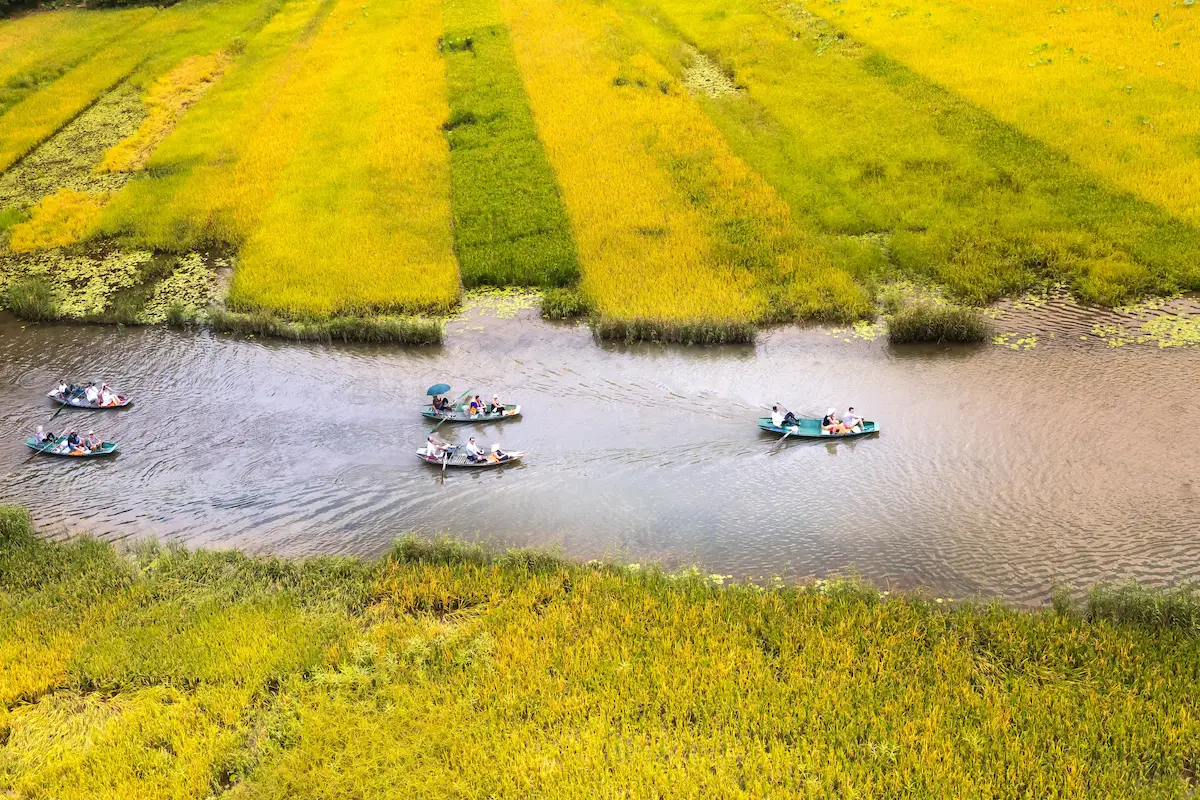
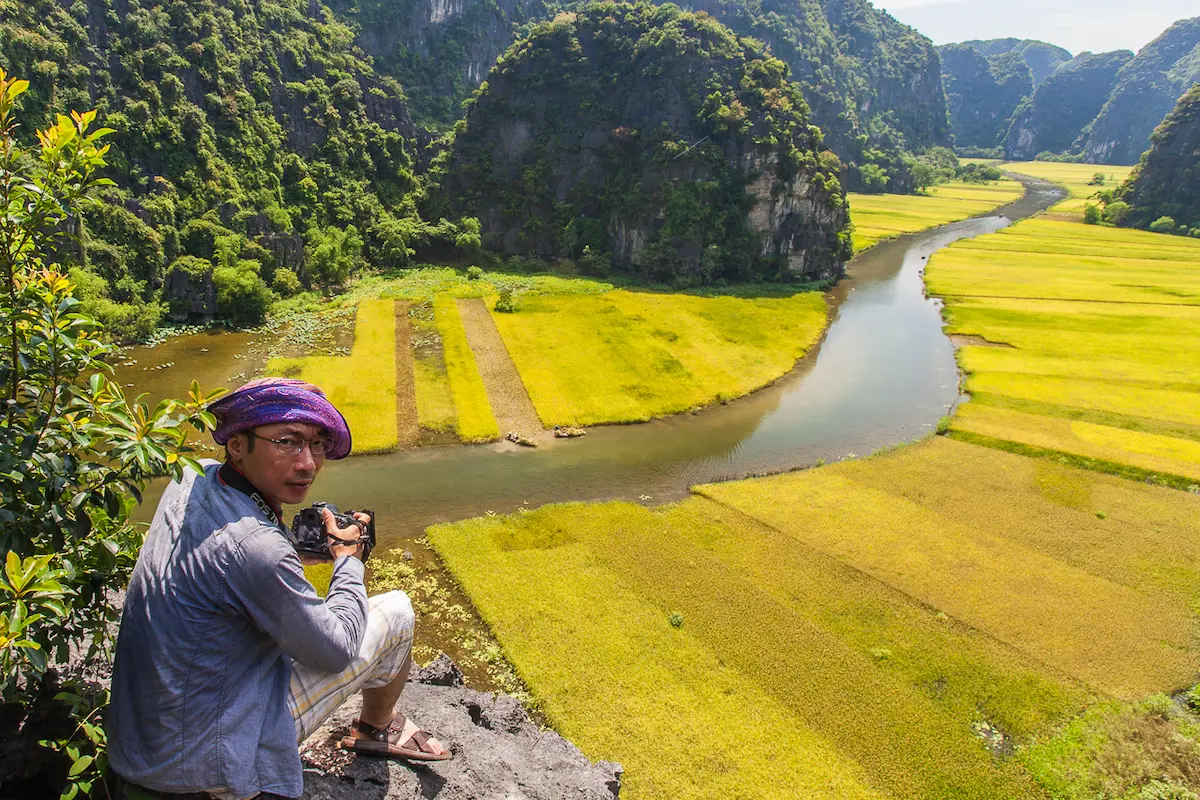
At peak ripeness, the rice becomes bright golden yellow. From higher viewpoints, the fields form broad patterns beneath the limestone mountains, while from the river the rice appears to surround the small boats traveling through the valley.
Once harvesting begins, the scenery changes quickly. Some fields may remain golden while neighboring areas have already been cut. Therefore, the landscape can look different from one day to the next during this short period.
What Is the Best Time of Day to See the Rice Fields?
Early Morning
Early morning is one of the best times to explore Tam Coc. Temperatures are generally more comfortable, the river is often calmer, and the soft morning light can create a gentle appearance across the rice fields.
For photographers, early morning is particularly attractive because the low-angle light can add texture to the rice and limestone cliffs without the harsh contrast of midday sunlight.
Late Afternoon
Late afternoon is another excellent option. As the sun becomes lower, the golden rice can appear even warmer, especially when the fields are viewed from an elevated position.
The light can change quickly near sunset, so photographers should arrive early enough to find a suitable viewpoint rather than waiting until the final minutes of daylight.
Photography tip: If your priority is photography, plan at least one sunrise or early-morning experience and one late-afternoon outing. This gives you two different lighting conditions and reduces the risk of missing good light because of changing weather.
Best Places to See the Rice Fields in Ninh Binh
1. Tam Coc Boat Ride
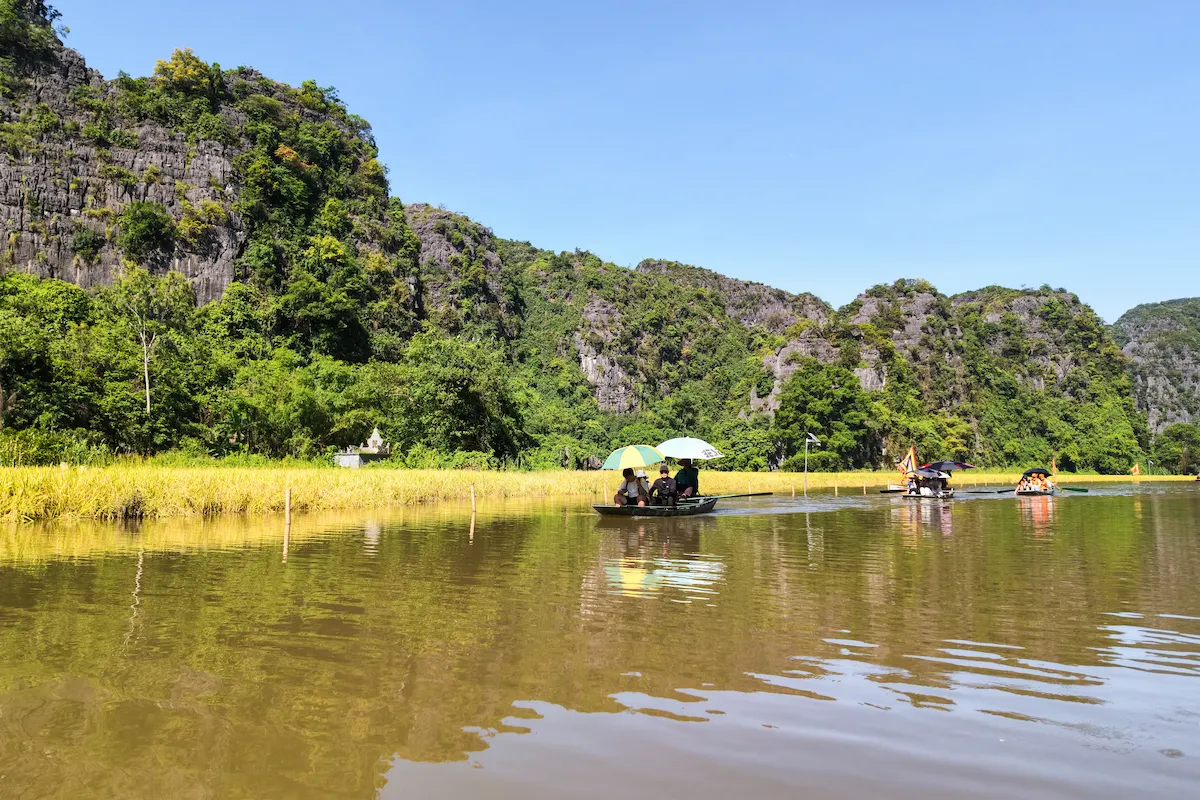
The most direct way to experience the Tam Coc rice harvest is from the Ngo Dong River. The boat route passes directly between limestone cliffs, rice paddies and caves.
From the boat, the fields feel close and immersive. You can observe the relationship between the river, agriculture and surrounding mountains from a perspective that is impossible to experience from the road.
2. Mua Cave Viewpoint
For a panoramic view, Mua Cave is one of the most famous viewpoints in the Ninh Binh area. From above, the valley reveals a broad mosaic of rice fields, waterways and limestone peaks.
The climb involves many steps, so visitors should allow sufficient time and bring water, especially during the warmer months.
3. Countryside Roads Around Tam Coc
Cycling around the countryside can offer another perspective on the rice fields. Small roads pass between villages, fields, temples and karst formations, allowing travelers to stop for photographs when conditions are suitable.
This option is especially enjoyable for travelers who want to combine the rice scenery with a slower exploration of rural Ninh Binh.
Should You Take a Boat Ride During Rice Harvest Season?
Yes. A boat ride is one of the best ways to appreciate the landscape because the Ngo Dong River runs directly through the rice-growing valley.
The experience is particularly photogenic when the rice is golden. However, the boat trip is still worthwhile outside harvest season because Tam Coc’s limestone caves, river and mountain scenery remain impressive throughout the year.
Travelers should also remember that Tam Coc is an active agricultural landscape. Farmers may be working nearby, and some areas may be in the middle of harvesting rather than displaying uninterrupted golden fields.
How Long Does the Rice Harvest Season Last?
The most visually attractive period can be relatively short. The transition from green to golden and then harvested fields may happen within a few weeks, with the exact timing depending on local farming conditions.
This is one reason why it is difficult to guarantee that every visitor will see the entire valley at exactly the same stage of ripeness. One side of a field may already be golden while another area remains green.
For this reason, travelers planning specifically around the rice harvest should keep their itinerary flexible and confirm the current situation with a local hotel, guide or tour operator shortly before traveling.
What Is the Weather Like During the Rice Harvest?
Late May and early June are generally warm, and visitors should be prepared for strong sunlight and high humidity. Conditions can change quickly, and occasional rain or thunderstorms are possible.
Lightweight clothing, sun protection, drinking water and comfortable walking shoes are recommended. For outdoor photography, a hat and sunscreen are particularly useful because viewpoints such as Hang Mua involve exposed sections and climbing.
Rain does not necessarily ruin a trip to Ninh Binh. After a shower, the limestone mountains can look greener, and clouds may produce dramatic backgrounds for photographs. However, travelers should exercise caution on slippery steps and wet paths.
How to Plan a Ninh Binh Trip Around Rice Harvest Season
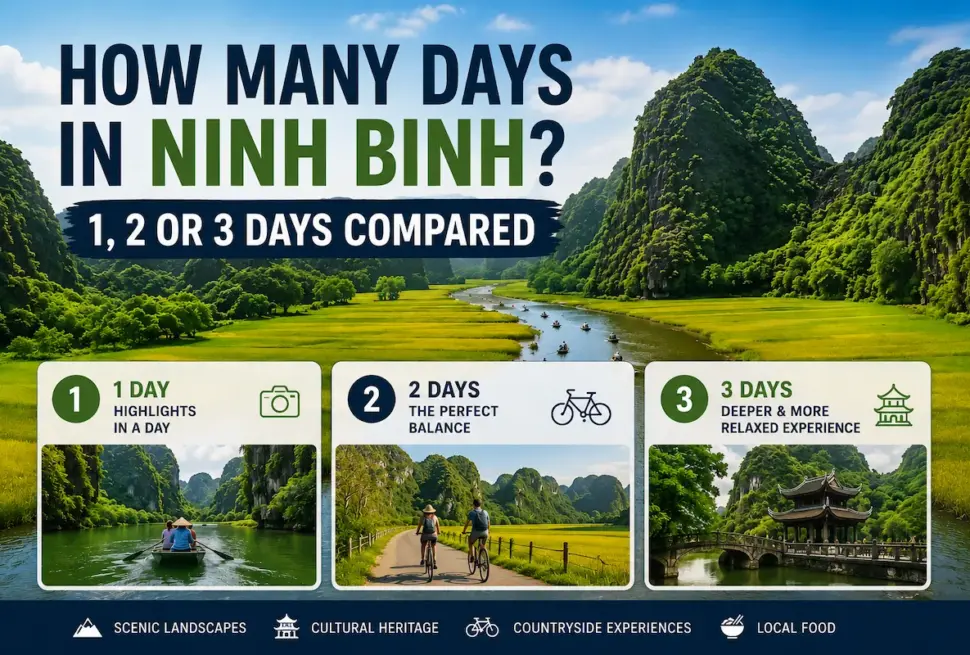
If seeing the golden rice fields is the main reason for your visit, try to spend at least two days in Ninh Binh rather than making a very short day trip from Hanoi. This provides more flexibility if
weather or field conditions are not ideal on the first day.
A practical itinerary can combine a Tam Coc boat trip with Hang Mua, local temples and a countryside cycling experience. Travelers staying overnight can also choose different times of day for photography instead of trying to fit everything into a few hours.
Sample 2-day plan:
Day 1: Travel from Hanoi to Ninh Binh, explore a local village or temple,
then enjoy a countryside experience before sunset.
Day 2: Early morning Tam Coc boat ride, Hang Mua viewpoint, lunch,
followed by another scenic stop before returning to Hanoi.
Tam Coc or Trang An During Rice Season?
Both Tam Coc and Trang An are famous for their limestone scenery and boat experiences, but they offer somewhat different landscapes.
Tam Coc is the stronger choice when your priority is seeing the iconic rice fields along the Ngo Dong River. The visual relationship between the golden paddies, river and karst mountains is especially distinctive during harvest season.
Trang An, meanwhile, is better known for its extensive cave and river scenery. The landscape remains impressive even when the rice fields are not golden.
Travelers with two days can consider experiencing both, while visitors with limited time should choose according to their priorities.
Is There a Guaranteed Rice Harvest Date?
No. There is no single fixed harvest date that applies to every field every year. Agricultural schedules are influenced by weather and local farming decisions.
This is particularly important for travelers who see photographs online and expect exactly the same landscape on a particular calendar date. Photographs can represent different years, and the scenery can change rapidly during harvest.
The safest approach is to use late May to early June as your planning window and then verify the current rice conditions closer to your trip.
Frequently Asked Questions About Ninh Binh Rice Harvest
When is rice harvest season in Ninh Binh?
The most famous rice harvest scenery in Tam Coc is generally seen from late May to early June. The exact timing can change from year to year depending on weather and agricultural schedules.
What is the best month to see golden rice in Tam Coc?
May is one of the best months to plan around, especially during the final weeks of the month. Early June can also be excellent when the fields remain golden before or during harvesting.
How long does the Tam Coc rice harvest last?
The most attractive golden period is relatively short and can vary by year. A flexible travel plan is recommended because individual fields may ripen or be harvested at different times.
Is Tam Coc worth visiting outside rice harvest season?
Absolutely. Tam Coc remains a beautiful destination throughout much of the year because of its limestone mountains, caves, river scenery, temples and countryside. The main difference is that the famous golden-rice landscape will not always be present.
Is the rice harvest season good for photography?
Yes. The combination of golden rice, green karst mountains and the Ngo Dong River provides excellent opportunities for landscape photography. Early morning and late afternoon usually offer the most attractive natural light.
Can I see farmers harvesting rice in Tam Coc?
You may see farmers working in or around the rice fields when your visit coincides with active harvesting. However, the exact activity varies from day to day and should not be considered guaranteed.
Final Thoughts: The Best Time for the Tam Coc Rice Harvest
So, when is rice harvest season in Ninh Binh? For the iconic golden landscape that travelers associate with Tam Coc, the best answer is late May to early June.
This short seasonal window transforms the Ngo Dong River valley into a remarkable combination of golden rice fields, green limestone mountains and traditional rural life. A boat ride through Tam Coc offers the closest experience to the fields, while Hang Mua provides a spectacular panoramic perspective from above.
Because rice is an agricultural crop rather than a tourist attraction with a fixed schedule, the precise timing changes each year. Therefore, the smartest approach is to plan around the general late-May to early-June window and confirm local conditions shortly before your arrival.
Planning a Ninh Binh trip during rice harvest season?
Combine Tam Coc with Hang Mua, local villages and other cultural attractions for a more complete
Northern Vietnam experience. Staying overnight also gives you more opportunities to enjoy the landscape
in the best morning and afternoon light.
Explore Ninh Binh with Culture Adventure Travel
Discover Tam Coc, Hang Mua, traditional villages, ancient temples and the scenic countryside of Ninh Binh.
Sources and further reading:
Vietnam National Authority of Tourism –
Ninh Binh: A journey through golden valleys
Vietnam Tourism –
Ninh Binh Tourism Week
Ninh Binh Provincial Government – information about