Planning your first trip to Ninh Binh?
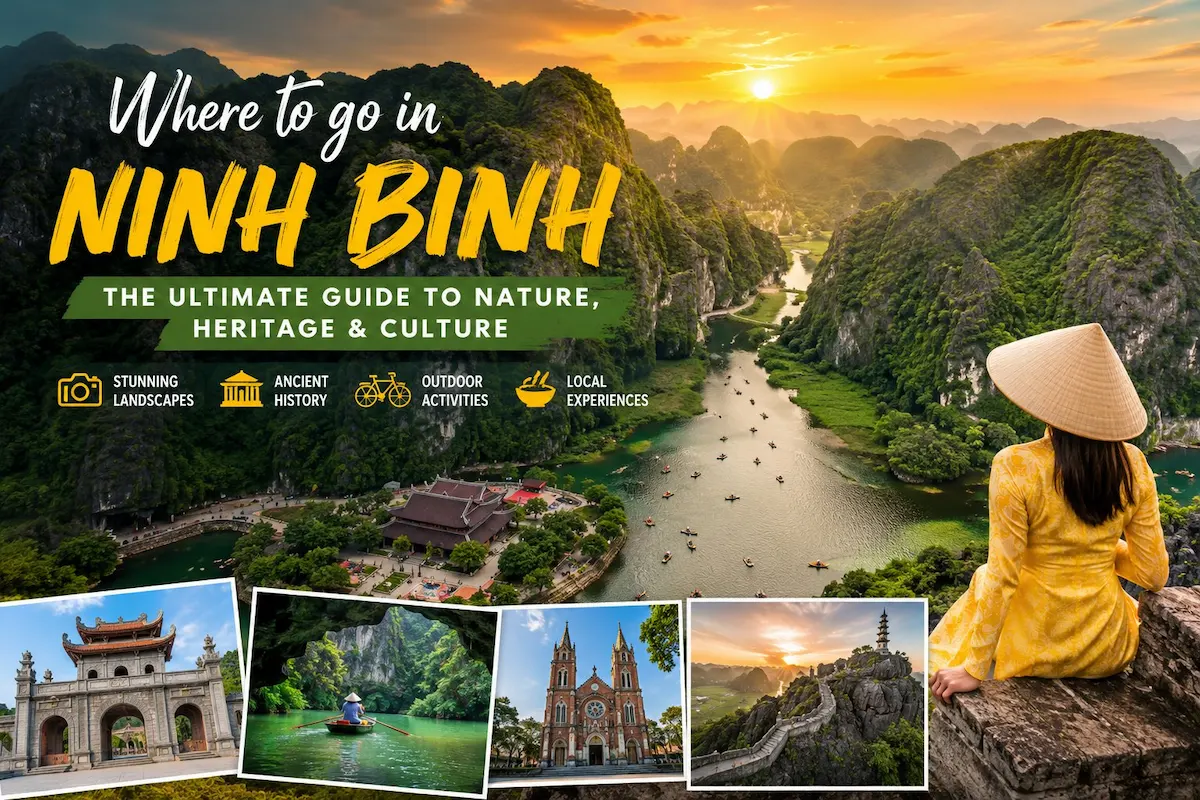
This guide covers the best places to visit, from spectacular boat routes and panoramic mountain viewpoints to ancient capitals, temples and major cultural landmarks. Use it to decide where to go in Ninh Binh and how to make the most of your time.
Ninh Binh is one of the most fascinating destinations in northern Vietnam, where dramatic limestone mountains rise from green rice fields, quiet rivers wind through hidden valleys, and centuries of history remain woven into the landscape.
Often called “Halong Bay on Land,” Ninh Binh offers a very different experience from coastal Halong Bay. Instead of sailing through the open sea, visitors travel by small traditional boats through limestone karsts, caves, wetlands and ancient waterways. The scenery is intimate, peaceful and constantly changing.
Located around 90 kilometres south of Hanoi, Ninh Binh is also one of the easiest destinations to add to a northern Vietnam itinerary. A short trip can introduce you to some of the country’s most impressive natural landscapes, while a longer stay allows time for historical sites, religious architecture, cycling and authentic countryside experiences.
But with so many attractions spread across the region, one question often comes first: where to go in Ninh Binh?
The answer depends on what you want from your trip. Nature lovers may prioritize Trang An and Hang Mua, history enthusiasts may prefer Hoa Lu, while travellers interested in architecture and culture can explore Bai Dinh and other remarkable religious sites. This guide will help you understand the differences so you can build an itinerary that suits your travel style.
🌿 Ninh Binh at a Glance
- Best for: Nature, photography, culture, history and slow travel
- From Hanoi: About 2 hours by road
- Recommended stay: 2–3 days for a relaxed experience
- Top highlights: Trang An, Tam Coc, Hang Mua, Hoa Lu and Bai Dinh
1. Top Natural Wonders: Where to Go in Ninh Binh
For many travellers, the landscapes are the main reason to visit Ninh Binh. Towering limestone formations, winding rivers and fertile rice fields create a scenery that feels almost unreal, particularly when seen from a small wooden boat or from a mountain summit.
If you are deciding where to go in Ninh Binh for the first time, the following natural attractions should be high on your list.
Trang An Landscape Complex
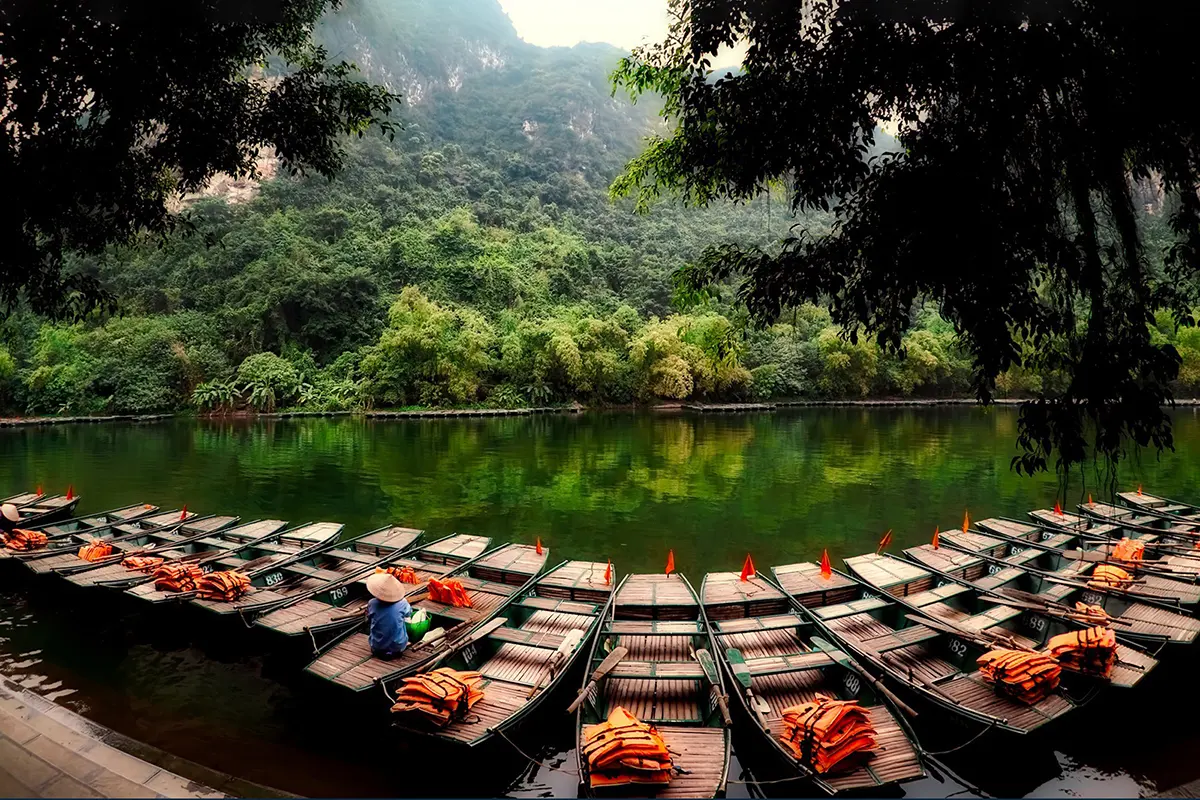
Trang An Landscape Complex is arguably the most iconic natural attraction in Ninh Binh. Recognized by UNESCO for its outstanding natural and cultural significance, Trang An is a spectacular network of limestone mountains, submerged valleys, caves, waterways and historic temples.
The landscape is best experienced from a traditional wooden sampan. A local rower guides the boat quietly along the river, passing between towering cliffs and through a series of natural caves. At several points the landscape feels almost completely enclosed by rock, before suddenly opening into a broad valley surrounded by karst peaks.
This combination of water, mountains and caves is what makes Trang An so memorable. It is not simply a boat ride; it is a slow journey through one of northern Vietnam’s most distinctive landscapes.
🚣 What to Expect at Trang An
- Traditional sampan boat journey through limestone valleys
- Natural cave passages and calm waterways
- Ancient temples and water shrines along the routes
- Approximately 2.5–3.5 hours depending on the route
There are three main boat routes, and each offers a slightly different combination of caves, scenery and cultural sites. According to the original guide, Route 2 and Route 3 are especially popular for visitors interested in places such as Dot Cave, Vam Cave and historic water shrines.
When Should You Visit Trang An?
Timing can make a noticeable difference to the experience. Starting your boat trip before 8:30 AM or after 3:00 PM can help you avoid the strongest midday heat and some of the busiest periods.
💡 Travel Tip: Keep your schedule flexible enough to enjoy the journey rather than rushing from one viewpoint to another. Trang An is one of those places where the atmosphere is as important as the individual sights.
Why put Trang An on your list? If you have never visited Ninh Binh before and need to choose just one major attraction, Trang An is an excellent starting point because it combines the region’s characteristic landscape and cultural heritage in a single experience.
Tam Coc – Bich Dong
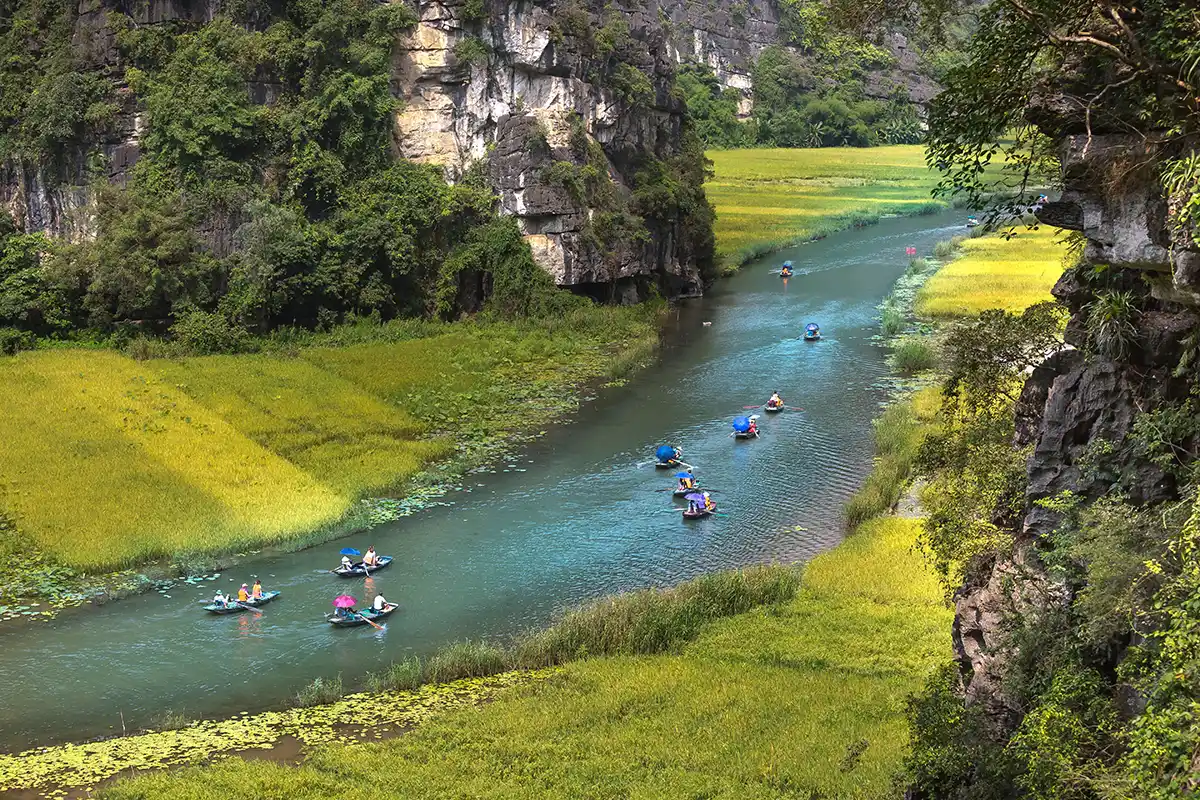
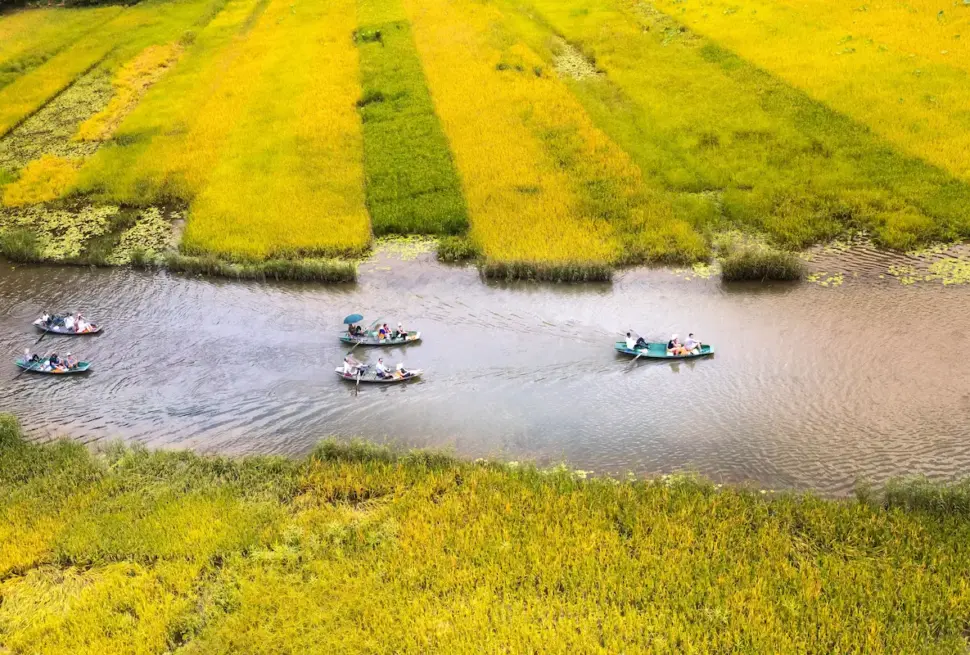
Tam Coc is another classic Ninh Binh experience and one of the most recognizable landscapes in northern Vietnam. The name means “Three Caves”, referring to Hang Ca, Hang Hai and Hang Ba, which are explored during the traditional boat journey along the Ngo Dong River.
The boat moves gently through the countryside, with limestone cliffs rising dramatically on both sides. Depending on the season, the surrounding fields may appear intensely green or turn golden as the rice ripens. This makes Tam Coc especially attractive to photographers and travellers who want to experience rural Vietnam at a relaxed pace.
One unusual detail that often attracts visitors is the rowing technique used by local boat operators. Some rowers skillfully use their feet to move the oars, creating a memorable and distinctly local sight.
🌾 Seasonal Highlight: Golden Rice Fields
The landscape around Tam Coc is particularly impressive from late May to early June, when the rice fields can turn golden during the harvest season. The exact timing and appearance vary from year to year, but this period is widely considered one of the most photogenic times to experience Tam Coc.
Bich Dong Pagoda
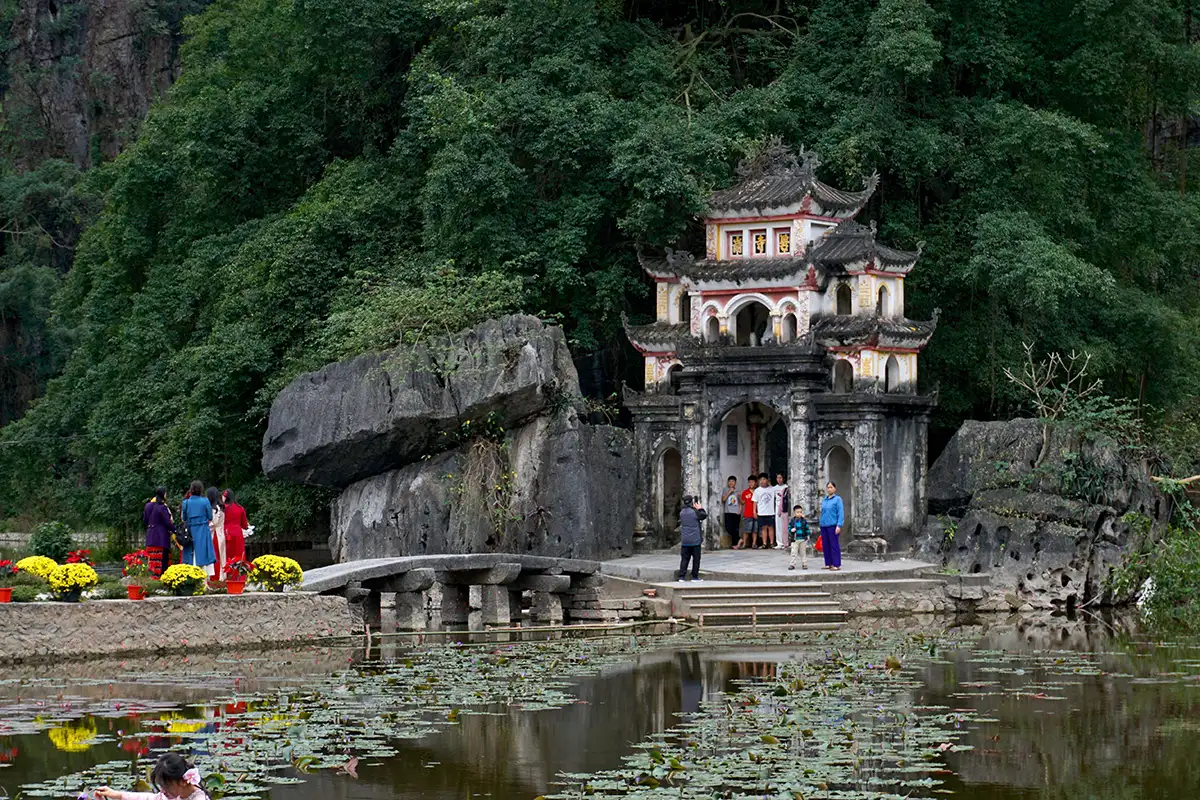
Just a short distance from Tam Coc is Bich Dong Pagoda, an atmospheric three-tiered pagoda built into the side of a limestone mountain. The approach passes a picturesque lotus pond and stone bridge before reaching the historic pagoda complex.
Its scale is much smaller than the enormous Bai Dinh complex, but that is part of its appeal. Bich Dong feels intimate and closely connected to its natural surroundings, making it an easy cultural addition to a Tam Coc visit.
📍 Best for:
Travellers who want a combination of boat scenery, rice fields, countryside cycling and a traditional Buddhist landmark. Tam Coc is also a convenient area to stay if you want restaurants, accommodation and easy access to several nearby attractions.
Hang Mua (Mua Cave & Dragon Peak)
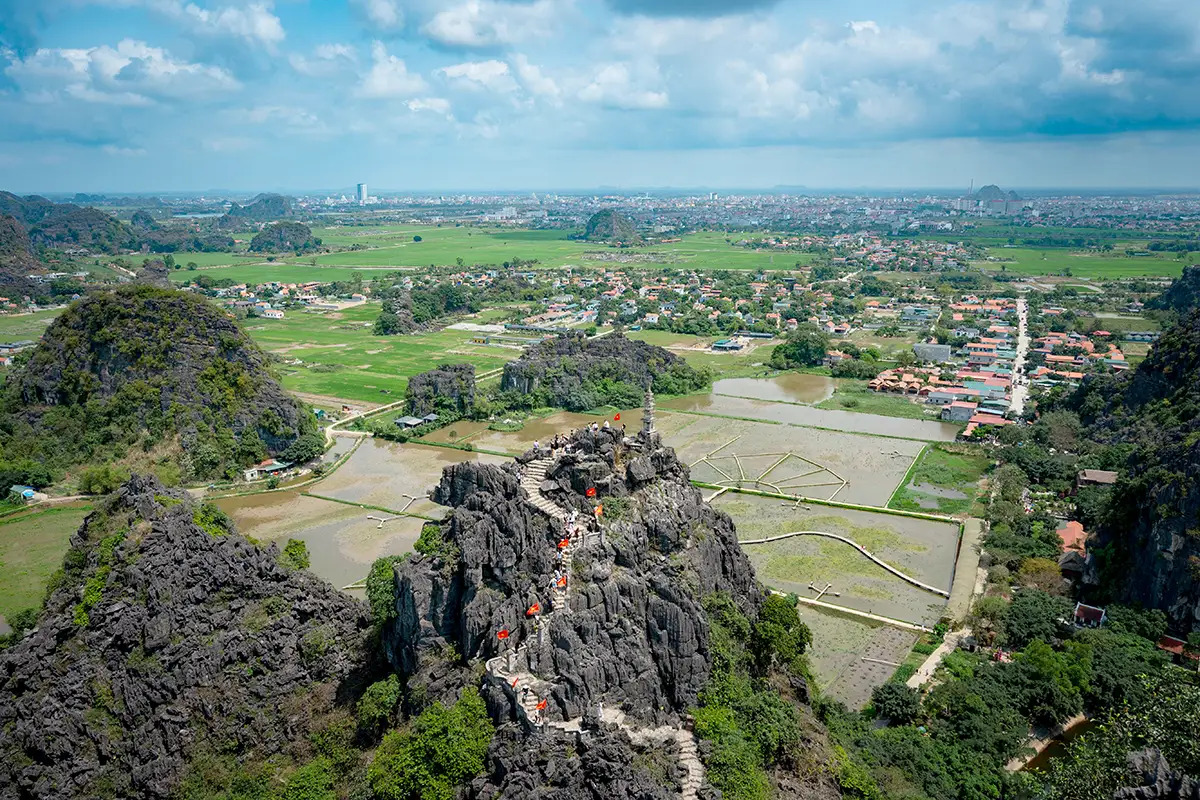
If you want to see Ninh Binh from above, Hang Mua should be one of your priorities. Located on Ngoa Long Mountain, the site is famous for its spectacular panoramic viewpoint over the surrounding karst landscape and the winding Ngo Dong River.
Reaching the top requires climbing approximately 486 stone steps. The ascent can be tiring, particularly under the midday sun, but the view at the summit makes the effort worthwhile.
At the top, a stone dragon stands along the mountain ridge, adding a dramatic focal point to the panoramic landscape. Looking down from the summit, you can see the distinctive limestone formations, fields and waterways that define Ninh Binh.
🥾 Before You Climb Hang Mua
- Wear comfortable shoes with a secure grip.
- Bring drinking water, especially on hot days.
- Start early if you want cooler temperatures and softer light.
- Allow time to enjoy the viewpoint rather than treating the climb as a quick photo stop.
For photographers and active travellers, Hang Mua provides a completely different perspective from the boat tours at Trang An and Tam Coc. Instead of moving through the landscape, you rise above it and see how the rivers, rice fields and limestone mountains fit together.
Van Long Wetland Nature Reserve
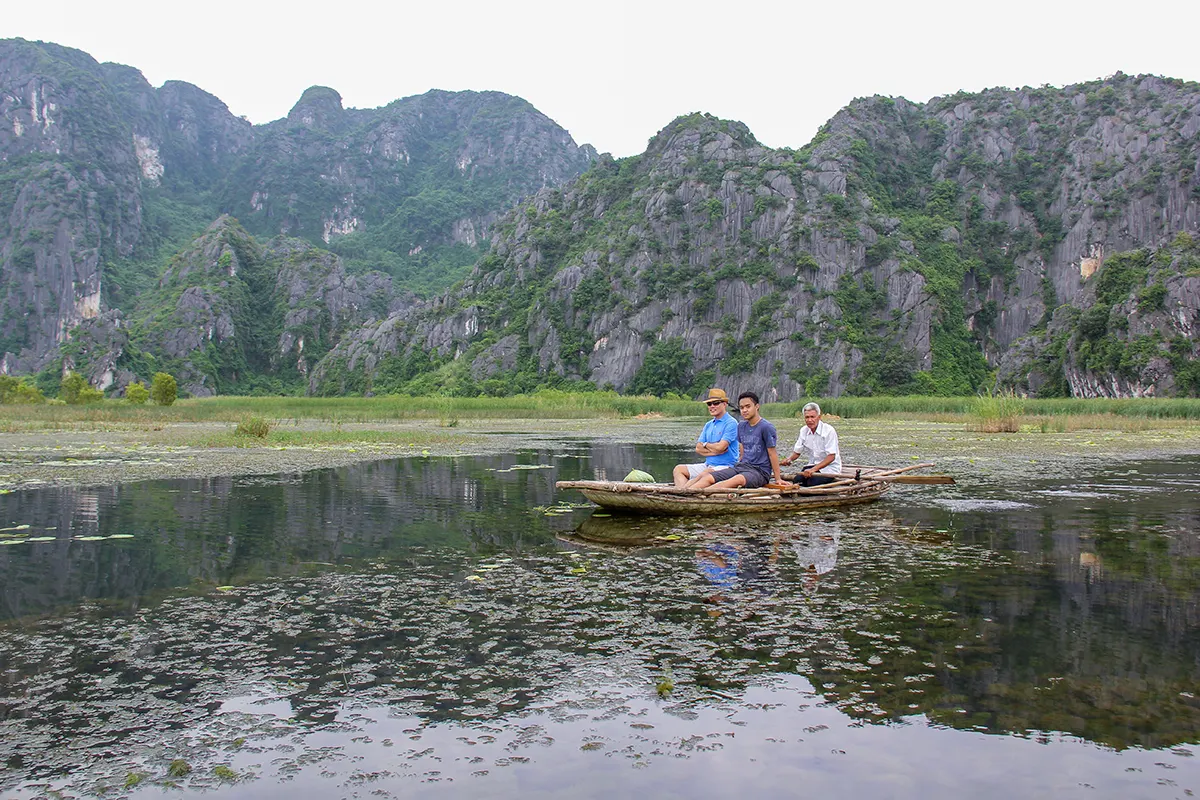
If you prefer a quieter environment away from some of Ninh Binh’s most visited attractions, consider Van Long Wetland Nature Reserve. It offers a peaceful boat experience through a broad wetland landscape surrounded by limestone mountains.
The water can be remarkably calm, creating clear reflections of the surrounding karsts. The slower pace and more tranquil atmosphere make Van Long a particularly good option for travellers interested in nature, landscape photography and quieter experiences.
The reserve is also an important habitat for the endangered Delacour’s langur, giving the destination ecological importance beyond its scenery.
🌱 Choose Van Long if you prefer:
- A more peaceful boat journey
- Wetland and limestone landscapes
- Nature photography and birdwatching
- A less crowded alternative to some of the better-known attractions
2. Historic Temples & Sacred Cultural Landmarks
Ninh Binh is not only about spectacular scenery. The region also played an important role in the early history of Vietnam. During the Dinh and Early Le dynasties in the 10th century, the area around Hoa Lu served as the country’s political centre.
That history is still visible today through ancient temples, religious complexes and monumental architecture. For travellers asking what to do in Ninh Binh beyond boat tours and mountain viewpoints, these cultural landmarks offer a deeper understanding of the destination.
Hoa Lu Ancient Capital
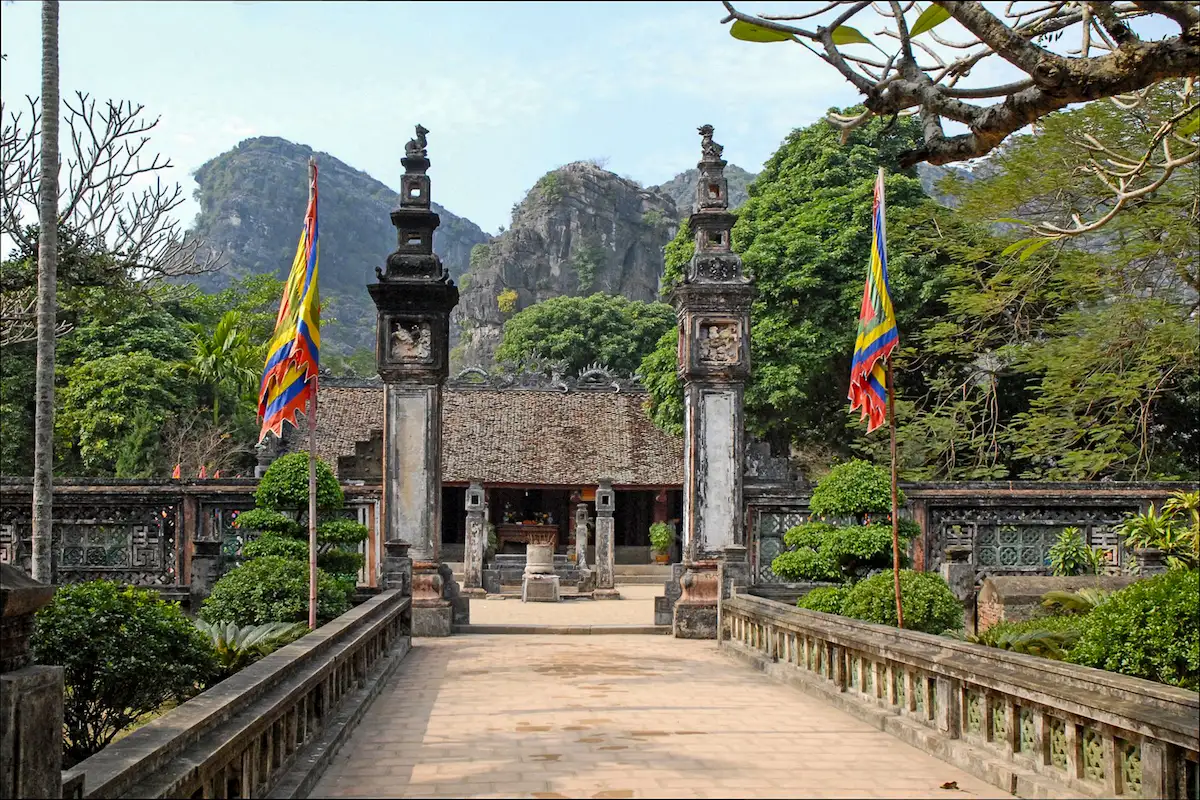
Nestled among dramatic limestone mountains, Hoa Lu Ancient Capital served as Vietnam’s political centre from 968 to 1010 AD. Its surrounding mountains provided natural protection and helped make the location an important centre during the country’s early independent period.
Today, visitors can explore the restored temples dedicated to King Dinh Tien Hoang and King Le Dai Hanh. The site retains a peaceful atmosphere, with traditional architectural details, carved wooden elements, historic-style foundations and quiet courtyards framed by limestone peaks.
Hoa Lu is especially rewarding when visited alongside Trang An because the two sites complement each other perfectly. Trang An explains the natural landscape of Ninh Binh, while Hoa Lu helps explain the historical importance of the same region.
🏛️ Why Visit Hoa Lu?
Choose Hoa Lu if you want to understand the historical story behind Ninh Binh’s landscape. It is one of the best places in the region to combine sightseeing with a sense of Vietnam’s early royal history.
Bai Dinh Pagoda Spiritual Complex
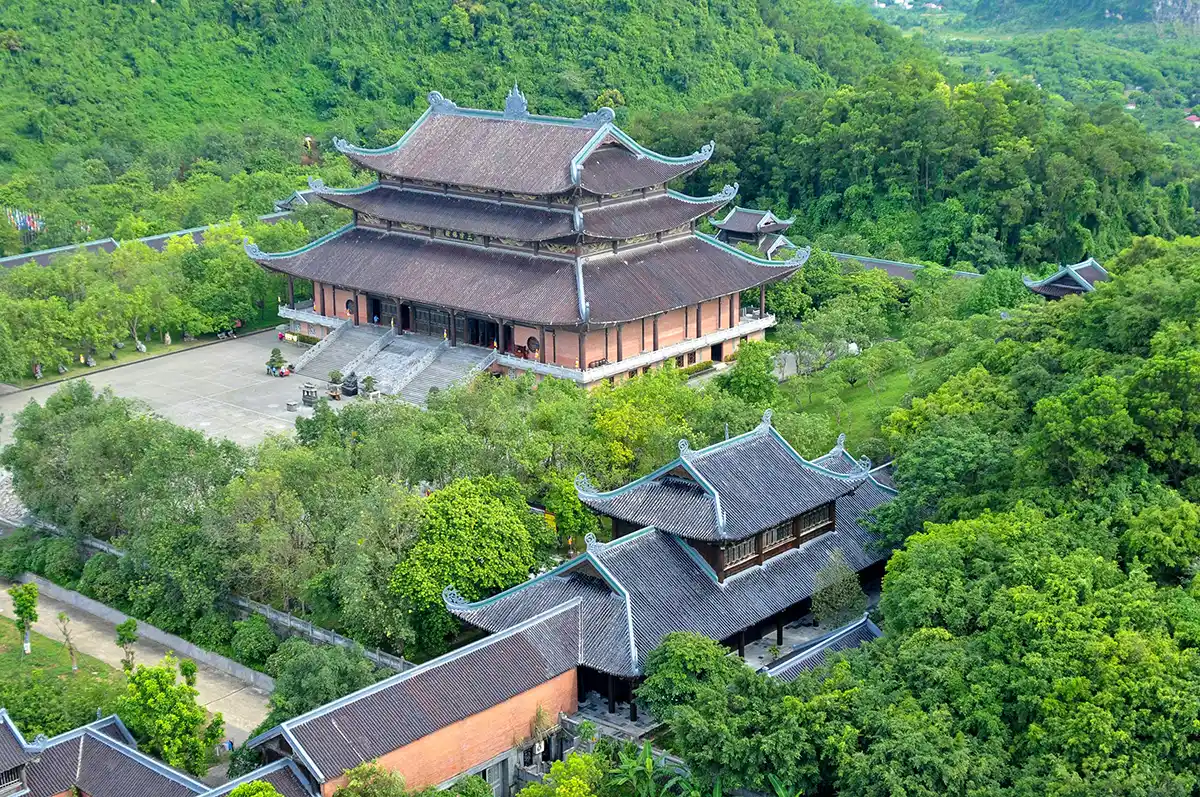
Bai Dinh Pagoda offers a very different experience from the smaller historic temples of Hoa Lu and Bich Dong. The complex is enormous, covering more than 500 hectares, and is known for its monumental scale and numerous Buddhist structures.
The site features several impressive architectural and religious highlights, including the Bao Thap stupa, long covered corridors lined with hundreds of Arhat stone statues, a massive bronze bell and large bronze Buddha statues.
✨ Bai Dinh Highlights
- Bao Thap: A monumental Buddhist stupa within the complex
- Arhat Corridor: Long galleries lined with hundreds of stone statues
- Giant Bronze Bell: One of the complex’s most impressive features
- Large Buddha Statues: Monumental religious sculptures and architecture
Bai Dinh is an excellent choice for visitors interested in Buddhism, religious architecture and large-scale cultural sites. It also shows another side of Ninh Binh: while places such as Trang An and Tam Coc are defined by intimacy and natural scenery, Bai Dinh is intentionally monumental and grand.
How to Choose Your First Ninh Binh Attractions
With so many choices, your first visit does not need to include everything. A simple way to plan is to choose one attraction from each major category.
| Your Interest | Best Choice |
|---|---|
| Boat scenery & caves | Trang An |
| Rice fields & countryside | Tam Coc |
| Panoramic mountain views | Hang Mua |
| Early Vietnamese history | Hoa Lu |
| Large Buddhist complex | Bai Dinh |
| Quiet wetland scenery | Van Long |
🌄 The Bottom Line
For a first visit, a combination of Trang An + Hang Mua + Hoa Lu gives you a strong introduction to Ninh Binh’s nature, scenery and history. Add Tam Coc, Bai Dinh or Van Long when you have more time or want to explore beyond the classic highlights.
Ninh Binh rewards travellers who take their time. The most memorable experiences often come not from rushing between attractions, but from slowing down on the river, cycling through the countryside, looking across the rice fields from a mountain summit or spending a quiet moment inside a historic temple.
3. Unique Architectural Heritage: Cathedrals & Monasteries
Ninh Binh is famous for limestone mountains, rivers and Buddhist temples, but there is another side of the region that deserves attention: its remarkable Christian architectural heritage. Travellers who explore beyond the most famous natural attractions will discover historic churches, monasteries and basilicas that reveal another important layer of northern Vietnam’s cultural history.
For visitors wondering where to go in Ninh Binh for something different from the usual boat tours, these destinations are especially rewarding. They are also excellent choices for travellers interested in architecture, photography, history and religious culture.
Phat Diem Stone Cathedral – Where East Meets West
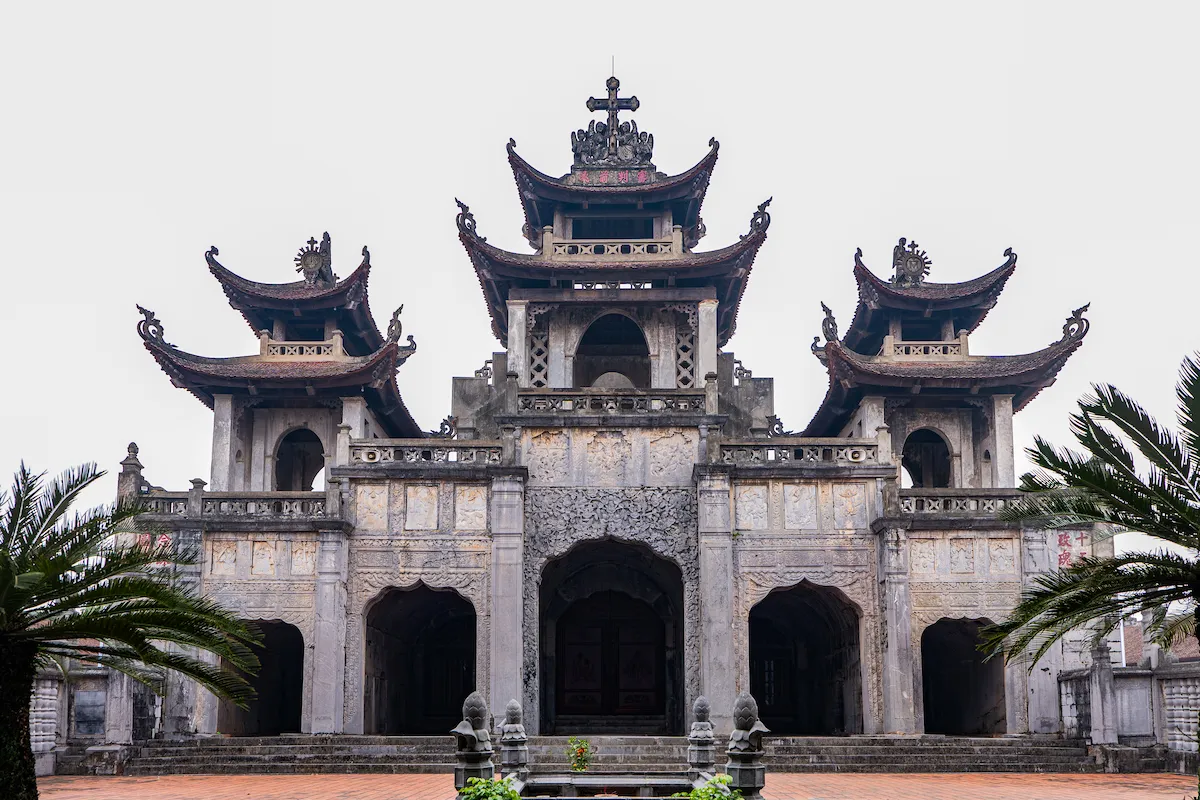
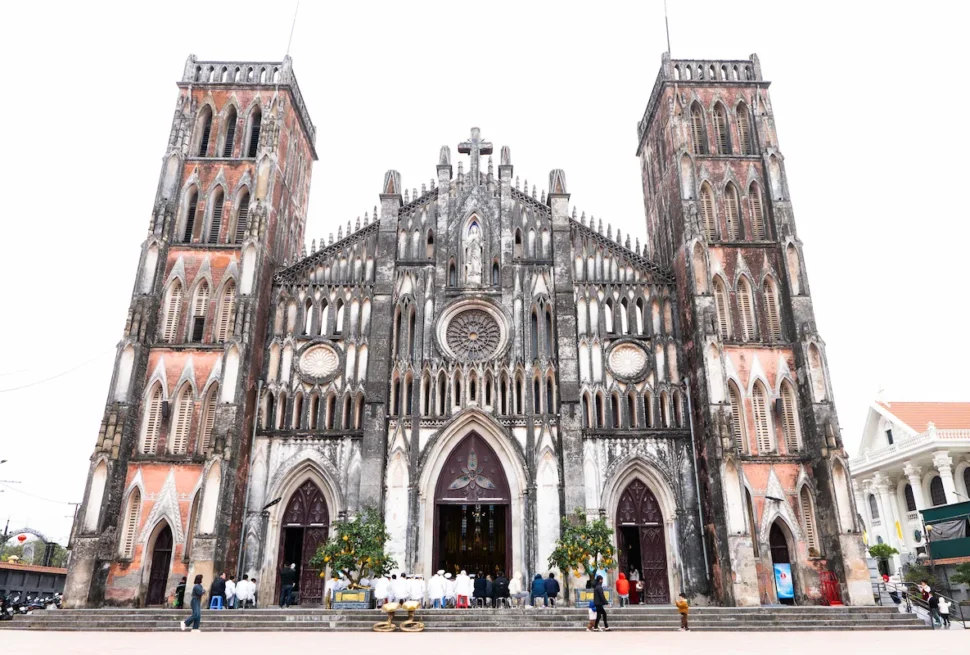
Phat Diem Stone Cathedral in Kim Son is one of the most unusual religious complexes in northern Vietnam. Completed in 1891, the complex is famous for bringing together Western Christian architecture and traditional Vietnamese architectural ideas in a remarkably coherent design.
Rather than resembling a typical European cathedral, Phat Diem incorporates features associated with Vietnamese temples, including curved multi-tiered roofs, lotus-inspired decoration and traditional structural forms. At the same time, the overall religious complex reflects Romanesque and Gothic influences, creating a fascinating architectural fusion.
One of the most recognizable structures is Phuong Dinh, the large stone bell tower that forms a dramatic focal point of the complex. Visitors can also see the Heart of Mary Chapel, noted in the original guide for its white stone construction.
🏛️ Why Visit Phat Diem?
- See an unusual combination of Vietnamese and Western architectural traditions.
- Explore one of the most distinctive religious complexes in northern Vietnam.
- Add a cultural and historical dimension to a nature-focused Ninh Binh itinerary.
- Enjoy a quieter experience away from the region’s main boat-tour attractions.
Phat Diem is particularly interesting because its architecture cannot be understood simply as “European” or “Vietnamese.” The complex demonstrates how different architectural traditions were brought together in one place, making it one of the most memorable answers to where to go in Ninh Binh for culture lovers.
💡 Visitor Tip
Phat Diem is a living religious site, so visitors should dress respectfully and be mindful of services or other religious activities taking place during their visit.
Chau Son Cistercian Monastery – A Peaceful Gothic Landmark
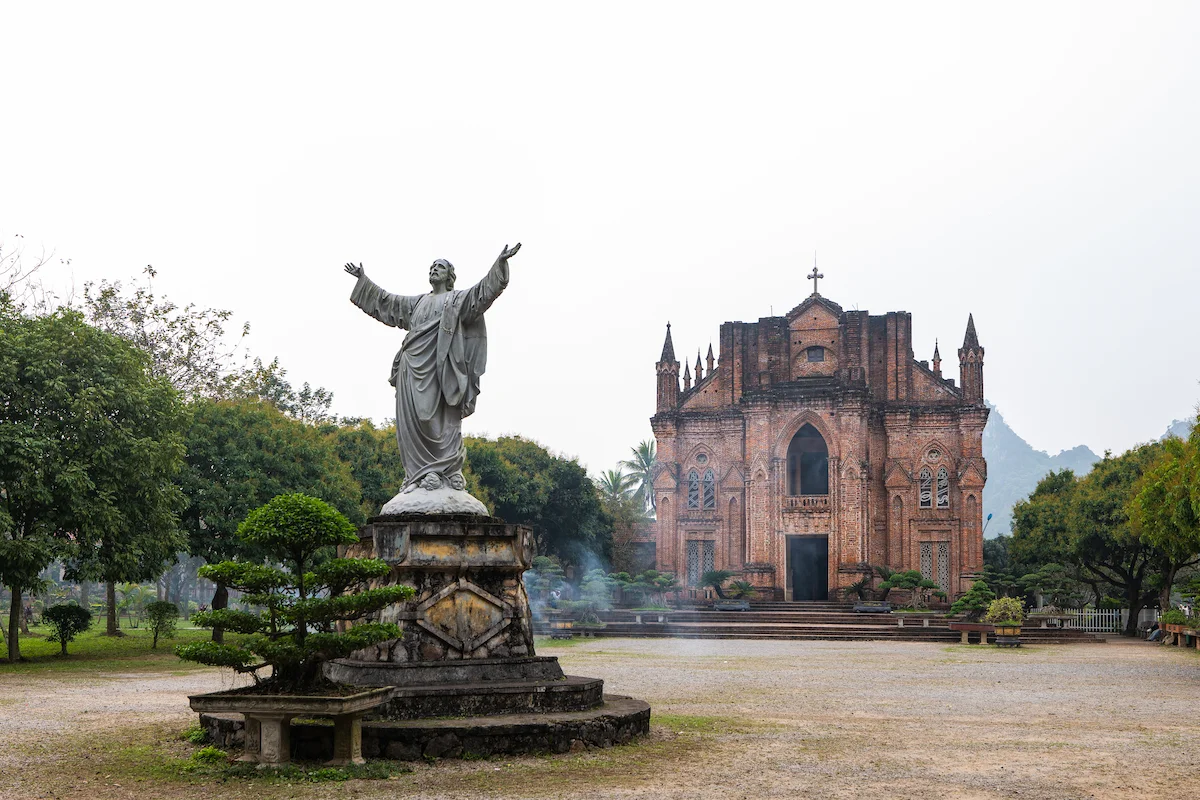
Hidden among the greenery of Nho Quan, Chau Son Monastery offers one of the most atmospheric architectural experiences in the area. Constructed in 1939, the monastery is built from unplastered red brick and features pointed arches, tall spires and a distinctly Gothic appearance.
The setting is just as important as the architecture. Surrounded by peaceful gardens and greenery, the monastery creates an atmosphere that feels surprisingly European while remaining deeply connected to the quiet countryside of Ninh Binh.
For photographers, Chau Son can be especially appealing because of the contrast between the warm red brick, Gothic forms and natural surroundings. It is also a good choice for travellers who have already visited the main attractions and want to see a less familiar side of the region.
🌿 Important to Know
Chau Son is an active contemplative monastery. The original guide notes that visiting access can be restricted at certain times, particularly to preserve the community’s silence and prayer routine. Check current local access arrangements before making a dedicated trip.
If your idea of what to do in Ninh Binh includes finding quiet, visually striking places away from the busiest tourist routes, Chau Son is worth considering.
So Kien Basilica – A Historic Stop on the Way to Ninh Binh
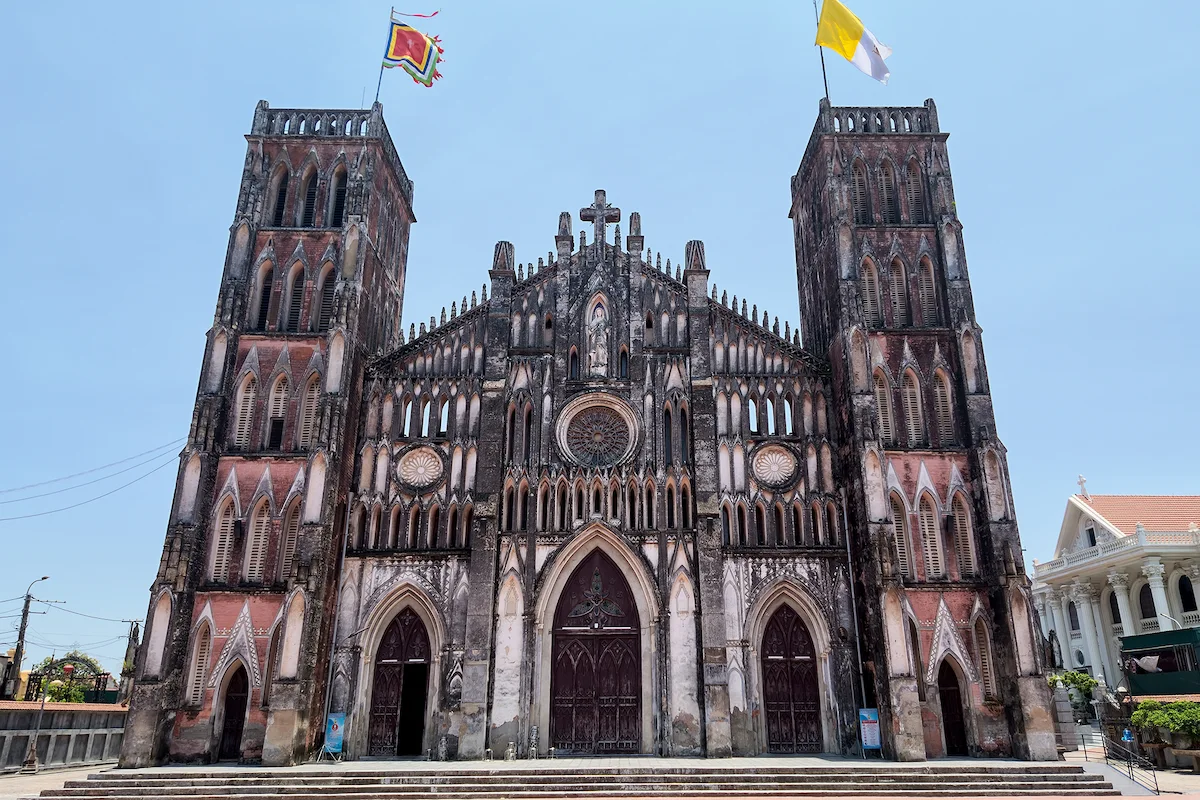
So Kien Basilica, also known as Ke So Church, is located in Chau Son Ward, Ninh Binh Province. Formerly part of Ha Nam Province, the area became part of the new Ninh Binh Province following Vietnam’s 2025 administrative merger. Its location along the route between Hanoi and the Ninh Binh region makes So Kien an especially convenient cultural stop for travellers interested in religious heritage and historic architecture.
Constructed in 1877, the basilica is one of Vietnam’s minor basilicas. Its features include soaring vaulted ceilings, stained-glass windows, a historic French pipe organ and a collection of holy relics.
For travellers interested in the religious and architectural heritage of northern Vietnam, So Kien can help connect the story between Hanoi, Ha Nam and Ninh Binh. It is especially suitable as part of a wider cultural route that also includes Phat Diem Cathedral and Chau Son Monastery.
📍 Cultural Heritage Route
So Kien Basilica → Phat Diem Stone Cathedral → Chau Son Monastery can form an interesting route for travellers who want to explore northern Vietnam through religious architecture rather than focusing only on natural attractions.
4. What to Do in Ninh Binh: Outdoor Activities & Local Experiences
After deciding where to go in Ninh Binh, the next question is how to experience the destination. Ninh Binh is at its best when you do more than simply move from one attraction to another.
The region offers a variety of simple but memorable activities, from cycling through rural villages to hiking in a national park, watching birds return to their roosts and trying regional specialties.
Cycle Through the Countryside

Cycling is one of the most enjoyable ways to experience the area around Tam Coc and Trang An. Instead of viewing the countryside through a vehicle window, you can move slowly along quiet roads, passing rice fields, lotus ponds, small farms and limestone mountains.
The experience is particularly pleasant in the early morning or late afternoon, when temperatures are more comfortable and the countryside feels quieter.
🚲 Best for: Travellers who want to combine light exercise, photography and an authentic countryside experience without needing a complicated excursion.
Trek in Cuc Phuong National Park
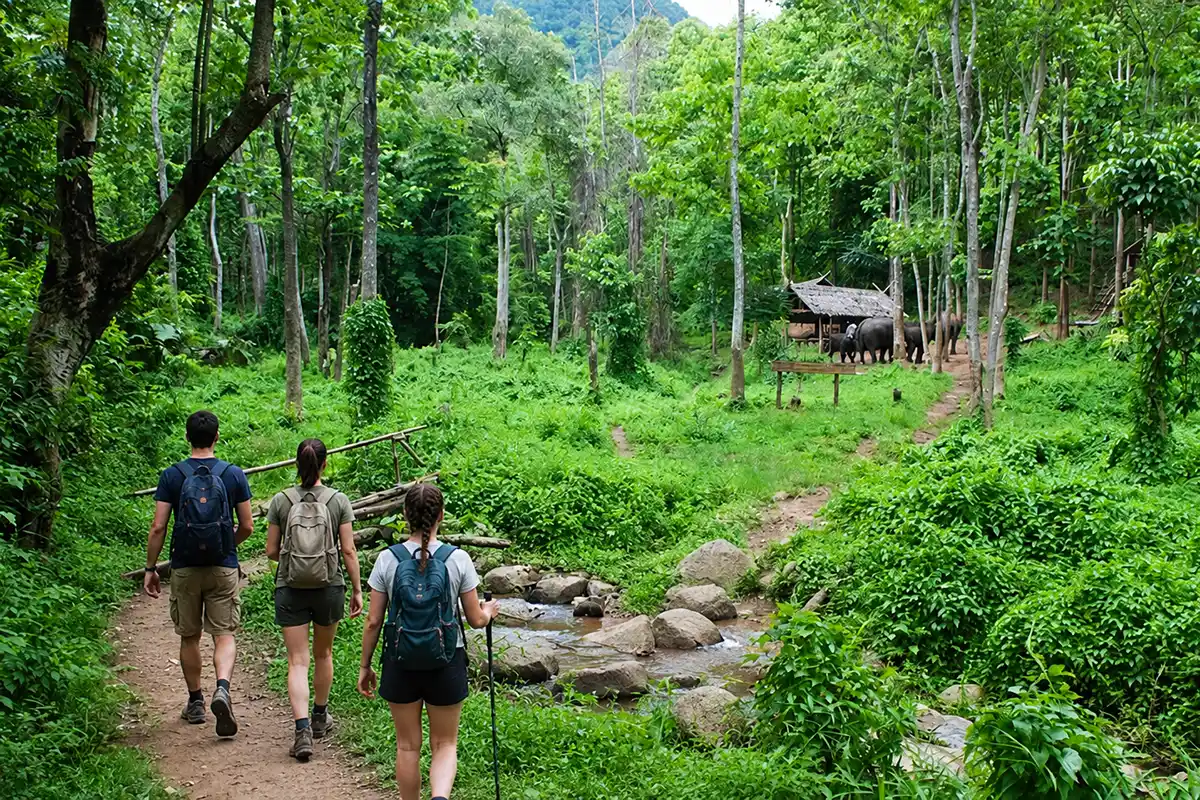
Nature lovers looking for something beyond the classic Ninh Binh boat tours should consider Cuc Phuong National Park. The original guide highlights it as Vietnam’s oldest national park and recommends several experiences within the forest.
Visitors can hike towards the Thousand-Year-Old Tree, visit the Endangered Primate Rescue Center and explore forest trails. The park is also associated with a particularly interesting butterfly season between April and May, when the forest can become especially attractive for nature enthusiasts.
🥾 Add Cuc Phuong if you want more nature
Cuc Phuong is a good choice for travellers staying longer in the region or for those who prefer forests, wildlife and hiking to conventional sightseeing.
Explore Thung Nham Bird Valley
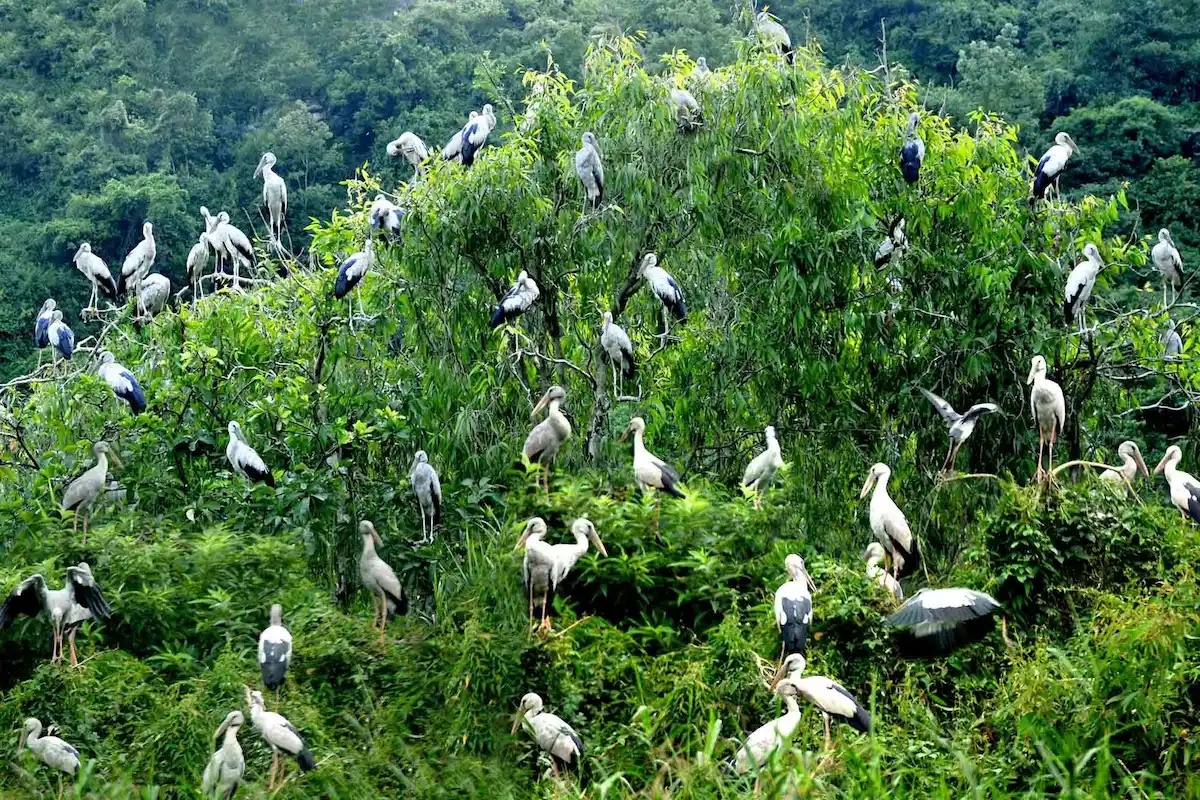
Thung Nham Bird Valley offers another nature-focused experience. The area combines wetlands, forests and limestone landscapes, while boat excursions can take visitors into the bird habitat.
The original guide particularly recommends a sunset boat trip, when large numbers of white storks, herons and other birds return to roost. The changing light and movement of birds can make the experience especially atmospheric.
Compared with the major attractions, Thung Nham provides a slower and more wildlife-oriented experience, making it a useful addition to an itinerary that already includes Trang An or Tam Coc.
Taste Local Specialties
Food is another important part of understanding a destination, and Ninh Binh has several specialties that are strongly associated with the local region.
🍴 Ninh Binh Foods to Try
- Com Chay: Crispy burnt rice, commonly served with a savoury topping or sauce.
- De Nui: Mountain goat, one of the region’s best-known specialties.
- Mountain Snails: A local delicacy that can be found seasonally.
Trying local food after a morning boat ride or a climb at Hang Mua is a simple way to make the trip more memorable. Rather than treating meals as an afterthought, consider them part of your Ninh Binh experience.
5. Practical Ninh Binh Travel Guide
Once you know where to go in Ninh Binh and what to do in Ninh Binh, a little practical planning can make the experience much smoother. The following overview is based on the practical guidance included in the original article.
Best Time to Visit Ninh Binh
| Period | Why Consider It? |
|---|---|
| March–May | Pleasant weather and generally good conditions for sightseeing and outdoor activities. |
| Late May–Early June | Golden rice harvest season around Tam Coc can create particularly beautiful scenery. |
| September–November | Cooler autumn conditions and potentially clear skies for exploring the region. |
Because weather and agricultural conditions vary from year to year, treat these periods as general planning guidance rather than guaranteed conditions.
How to Get to Ninh Binh from Hanoi
- Limousine van: Approximately 2 hours from Hanoi Old Quarter.
- Train: The Reunification Express takes roughly 2 hours from Hanoi Railway Station.
- Private car: A convenient option for travellers who want flexible departure times and multiple stops.
- Motorbike: Provides independence for experienced riders comfortable with longer-distance travel.
How Many Days Do You Need in Ninh Binh?
The original guide recommends 2 to 3 days for a relaxed visit. This provides enough time to combine natural attractions, boat tours and historical or cultural sites without trying to fit everything into a single rushed day.
🕒 Our Simple Rule
1 day: Focus on the essential highlights.
2 days: A much better balance of nature and culture.
3 days: Ideal for adding quieter places and outdoor experiences.
6. Suggested 2-Day Ninh Binh Cultural & Nature Itinerary
For travellers who want to combine scenery, history and cultural heritage, the following itinerary adapts the 2-day plan from the original guide into a more visually organized travel schedule.
DAY 1 – Nature & Adventure
🌅 Morning – Arrive in Ninh Binh
Travel from Hanoi to Ninh Binh and check into accommodation around Tam Coc or Trang An. After settling in, head to Hang Mua while the temperature is still relatively comfortable.
🥾 Late Morning – Climb Hang Mua
Climb Ngoa Long Mountain and enjoy the panoramic view over the limestone landscape, rice fields and the winding Ngo Dong River.
🚣 Afternoon – Trang An Boat Trip
Spend around three hours on a traditional sampan through the Trang An grottoes, caves, valleys and waterways.
🏛️ Late Afternoon – Hoa Lu Ancient Capital
Continue to Hoa Lu to explore the temples associated with the Dinh and Early Le dynasties and discover the historical importance of the region.
🍽️ Evening – Local Dinner
Enjoy regional specialties such as mountain goat and crispy rice before relaxing for the evening.
DAY 2 – Architecture & Hidden Heritage
⛪ Morning – Phat Diem Stone Cathedral
Travel towards Kim Son and explore the extraordinary combination of Vietnamese and Western architectural influences at Phat Diem Cathedral.
🏰 Afternoon – Chau Son Monastery or So Kien Basilica
Choose Chau Son Monastery for its peaceful Gothic architecture, or consider So Kien Basilica if it fits naturally into your return journey towards Hanoi.
🚲 Late Afternoon – Countryside Ride
End the trip with a relaxed bicycle ride through the rural landscape around Tam Coc, where rice fields, lotus ponds and limestone mountains create a peaceful final impression of Ninh Binh.
If you prefer to experience this combination of nature, culture and local heritage with a well-planned itinerary, join our Ninh Binh Culture & Nature Escape 2 Days tour from Hanoi.
How to Adapt This Itinerary
Not every traveller needs to follow the same route. Your best itinerary depends on your interests and travel pace.
- Nature lovers: Give more time to Trang An, Tam Coc, Van Long or Cuc Phuong.
- Photographers: Prioritize Hang Mua, Tam Coc and countryside cycling.
- History lovers: Combine Hoa Lu with Bai Dinh and the region’s religious landmarks.
- Cultural travellers: Consider a dedicated route covering Phat Diem, Chau Son and So Kien.
7. Where to Go in Ninh Binh: Building the Right Itinerary for You
There is no single perfect answer to where to go in Ninh Binh. The region is diverse enough that the best itinerary depends on the experience you want.
For a first-time visit, Trang An, Hang Mua and Hoa Lu provide a particularly well-balanced introduction to Ninh Binh. You experience the rivers and caves, see the landscape from above and then connect that landscape to Vietnam’s early history.
Travellers with additional time can choose Tam Coc for its classic countryside scenery, Bai Dinh for monumental Buddhist architecture, Van Long for a quieter wetland experience, or one of the region’s Christian heritage sites for a completely different cultural perspective.
⭐ A Simple 2-Day Formula
Day 1: Hang Mua + Trang An + Hoa Lu
Day 2: Phat Diem + Chau Son or So Kien + countryside cycling
Final Thoughts: What to Do in Ninh Binh Beyond the Famous Attractions
Ninh Binh is easy to describe through its famous images: limestone mountains rising from rice fields, small boats disappearing into caves and ancient temples surrounded by dramatic scenery. But the destination becomes much more interesting when you look beyond those postcard views.
Take time to cycle through the countryside. Stop for local food. Visit an ancient capital. Explore an unusual cathedral. Sit quietly beside a monastery. Watch birds return to their roost. These experiences help reveal the cultural and human side of the landscape.
That is why the best answer to what to do in Ninh Binh is not simply to visit as many attractions as possible. Instead, combine a few major highlights with experiences that allow you to slow down and appreciate the destination.
Whether you have one day or three, Ninh Binh offers an impressive combination of nature, heritage, culture and authentic rural experiences. With the right itinerary, your time here can become one of the most memorable parts of a northern Vietnam journey.
🌿 Your Ninh Binh Journey Starts Here
From the caves of Trang An and the rice fields of Tam Coc to the summit of Hang Mua and the remarkable architecture of Phat Diem, Ninh Binh has something for every curious traveller. Choose your priorities, slow down and leave room for discovery.