Looking for the best Mua Cave hiking guide before your visit to Ninh Binh? Hang Mua is famous for its steep stone staircase, dramatic Dragon Peak and sweeping views over the Tam Coc valley, Ngo Dong River and surrounding limestone mountains. The climb requires some effort, but with the right timing, comfortable shoes and a steady pace, most reasonably active travelers can enjoy one of the most spectacular viewpoints in northern Vietnam.
Quick Visitor Information
- Local name: Hang Mua
- Location: Ninh Xuan, Hoa Lu, Ninh Binh
- Main attraction: Panoramic viewpoint above the Tam Coc valley
- Climb: Nearly 500 stone steps to the summit
- Difficulty: Moderate, with steep and uneven sections
- Recommended visit time: Around 1.5–2 hours
- Best time of day: Early morning or late afternoon
- Best for: Photography, hiking, landscape views and active travelers
- Easy to combine with: Tam Coc
Map
Mua Cave Hiking Guide: Why Is It Worth the Climb?
Mua Cave offers a completely different way to experience Ninh Binh. While Tam Coc and Trang An are best known for taking visitors through the limestone landscape by boat, Hang Mua takes you above it.
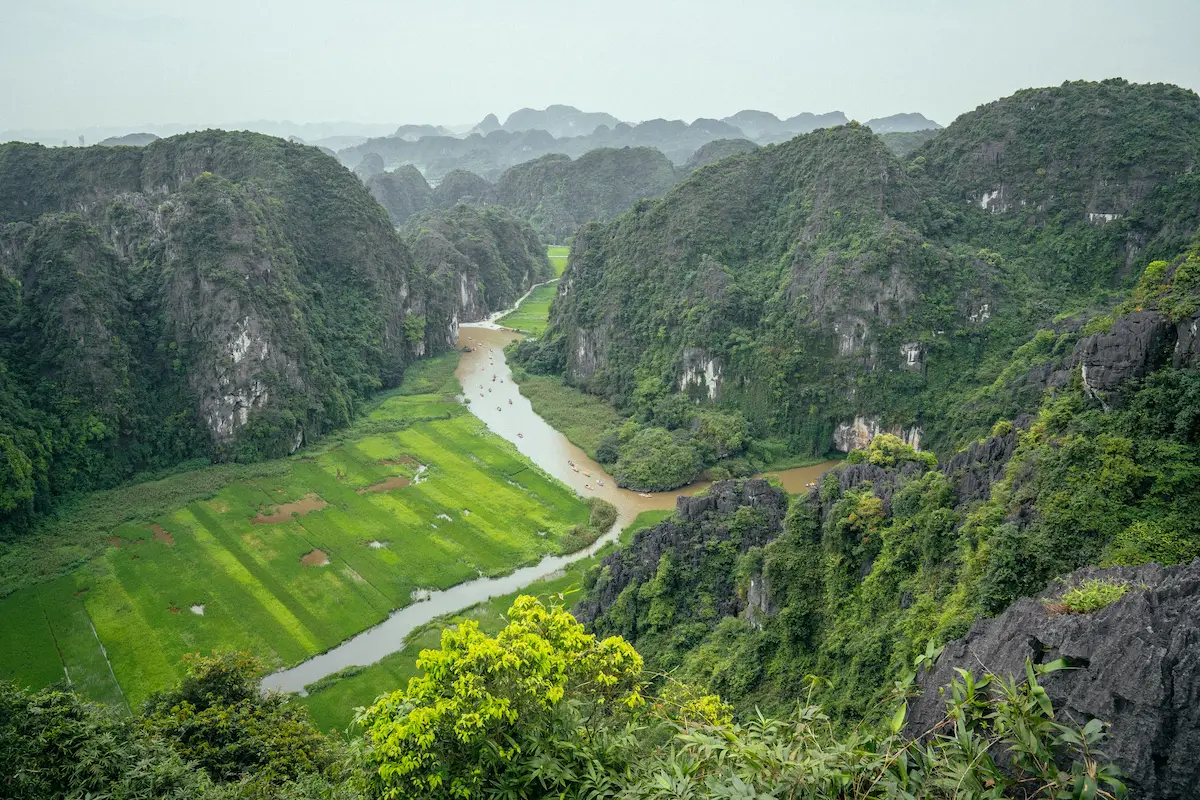
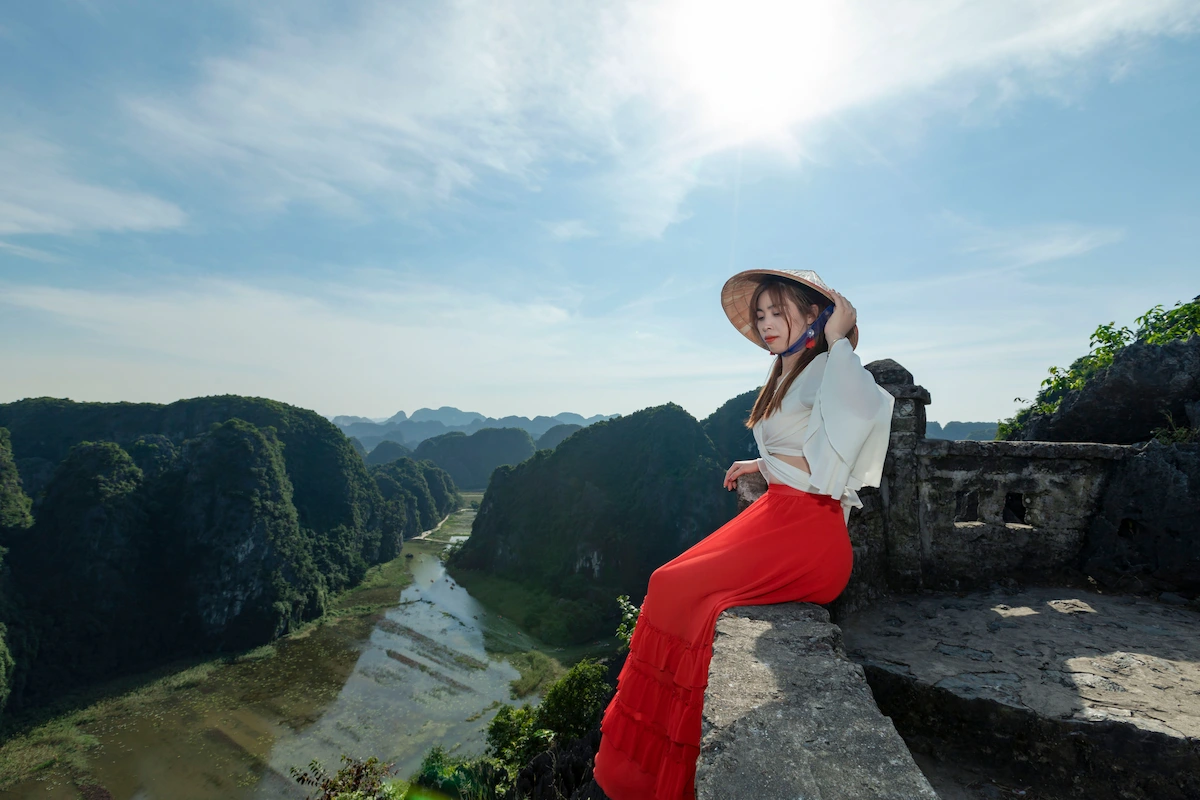
From the summit, you can see how the limestone mountains, winding rivers, rice fields and villages connect across the valley. The elevated perspective is particularly rewarding for travelers who enjoy photography and want to understand the scale of Ninh Binh’s famous karst scenery.
The experience is not only about reaching the top. The stone staircase itself is part of the attraction, with changing views appearing as you climb higher. By the time you reach the upper section, the Tam Coc valley opens into one of the region’s most recognizable panoramas.
Highlights of Mua Cave
- Climb the dramatic stone staircase toward Dragon Peak.
- Enjoy panoramic views across Tam Coc and the surrounding karst mountains.
- See the Ngo Dong River winding through the valley.
- Photograph rice fields from above.
- Explore the small cave and landscaped area at the foot of the mountain.
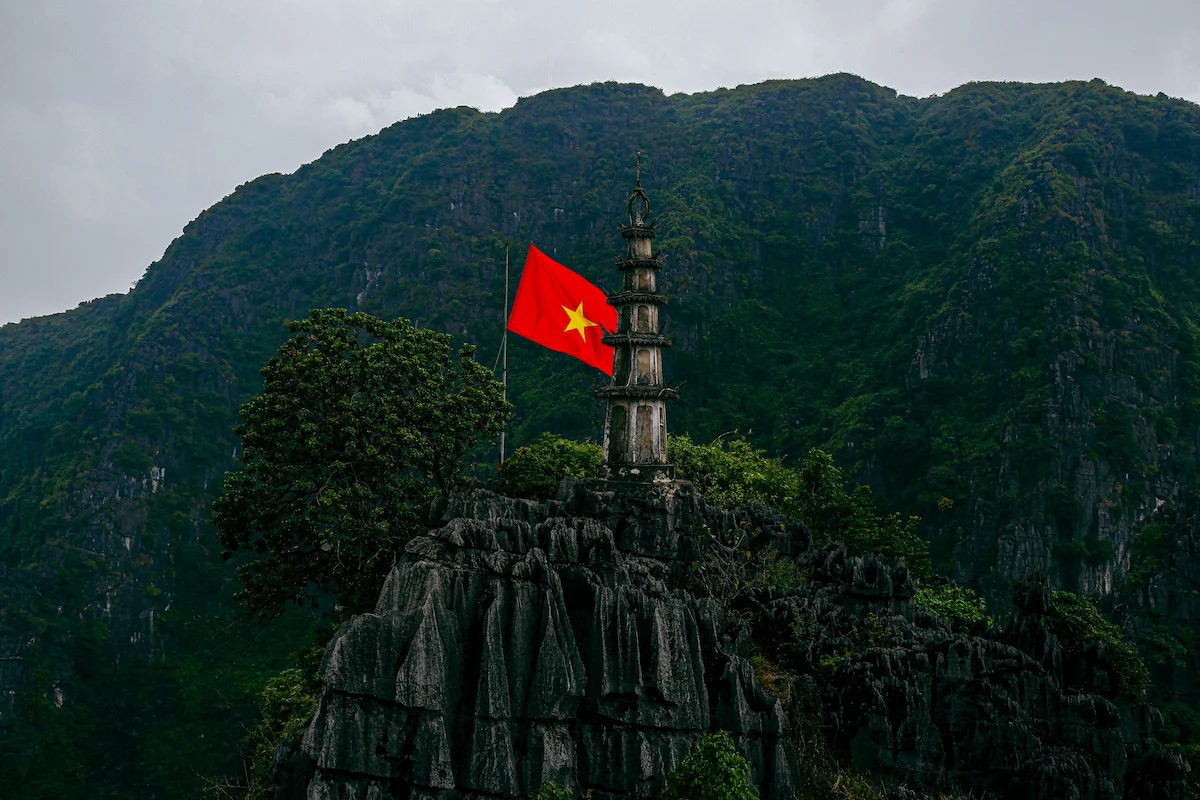
- See stone sculptures and traditional architectural details along the route.
- Choose between two viewpoints near the upper section.
The Mua Cave Hiking Route: What to Expect
The hike begins in the landscaped area at the foot of the mountain. The lower section is relatively manageable, but the staircase becomes progressively steeper as you approach the upper viewpoints.
There are many stone steps, and some sections are uneven. Handrails are available along much of the route, but you should still pay attention to your footing. This is especially important after rain, when the stone can become slippery.
One of the advantages of Mua Cave is that you do not have to reach the highest point to enjoy the scenery. Lower and middle sections of the route already offer attractive views across the valley.
This Mua Cave hiking guide is designed to help you understand the route before you start climbing, from the first stone steps to the viewpoints near the summit. Knowing what to expect can make the hike more comfortable and enjoyable, especially during hot or humid weather.
How Difficult Is the Mua Cave Hike?
The Mua Cave hike is best described as moderate rather than extreme. There is no technical climbing involved. The main challenge comes from the combination of steep stairs, heat, humidity and the sustained effort required to keep climbing.
Travelers with average fitness can usually complete the climb at a comfortable pace. Older visitors or those with mobility or balance concerns may prefer to take more breaks and stop at one of the lower viewpoints if necessary.
For a more comfortable hike
- Wear shoes with good grip rather than smooth sandals or flip-flops.
- Bring water before starting the climb.
- Keep your backpack as light as possible.
- Take regular breaks instead of pushing yourself too quickly.
- Be extra careful on wet stone after rain.
How to Reach Dragon Peak
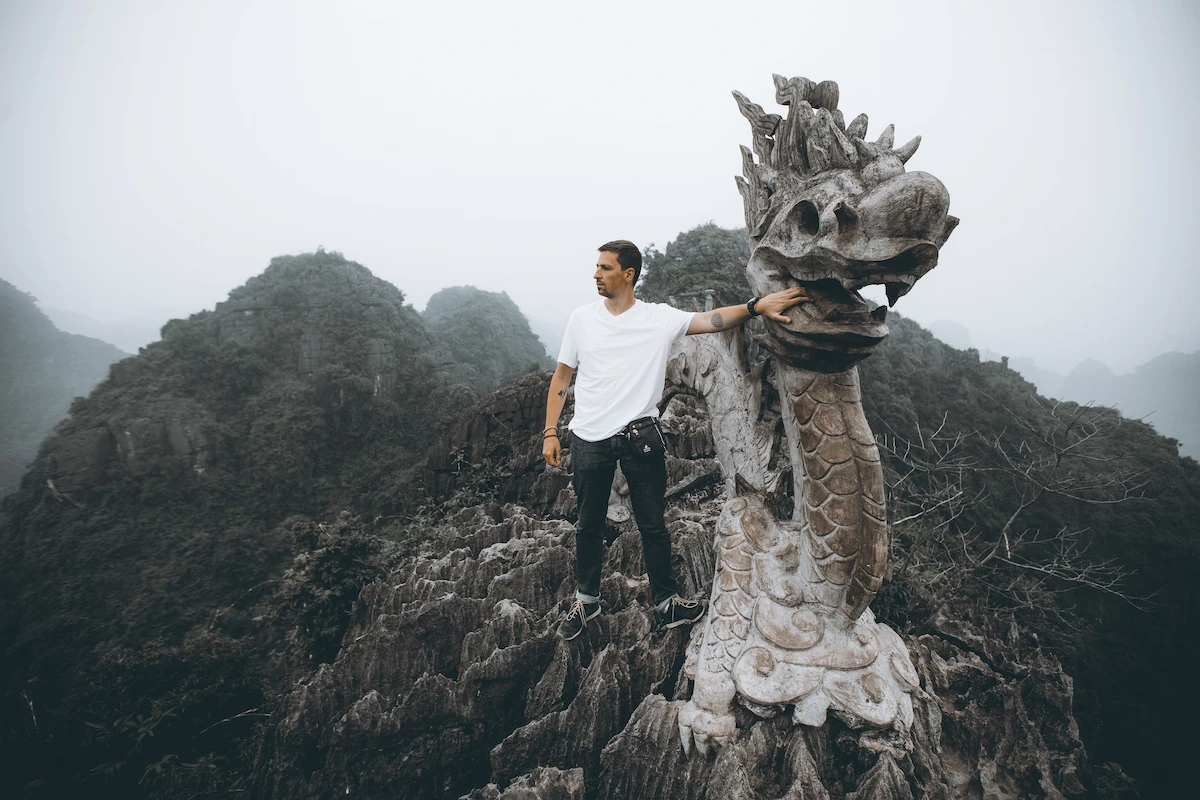
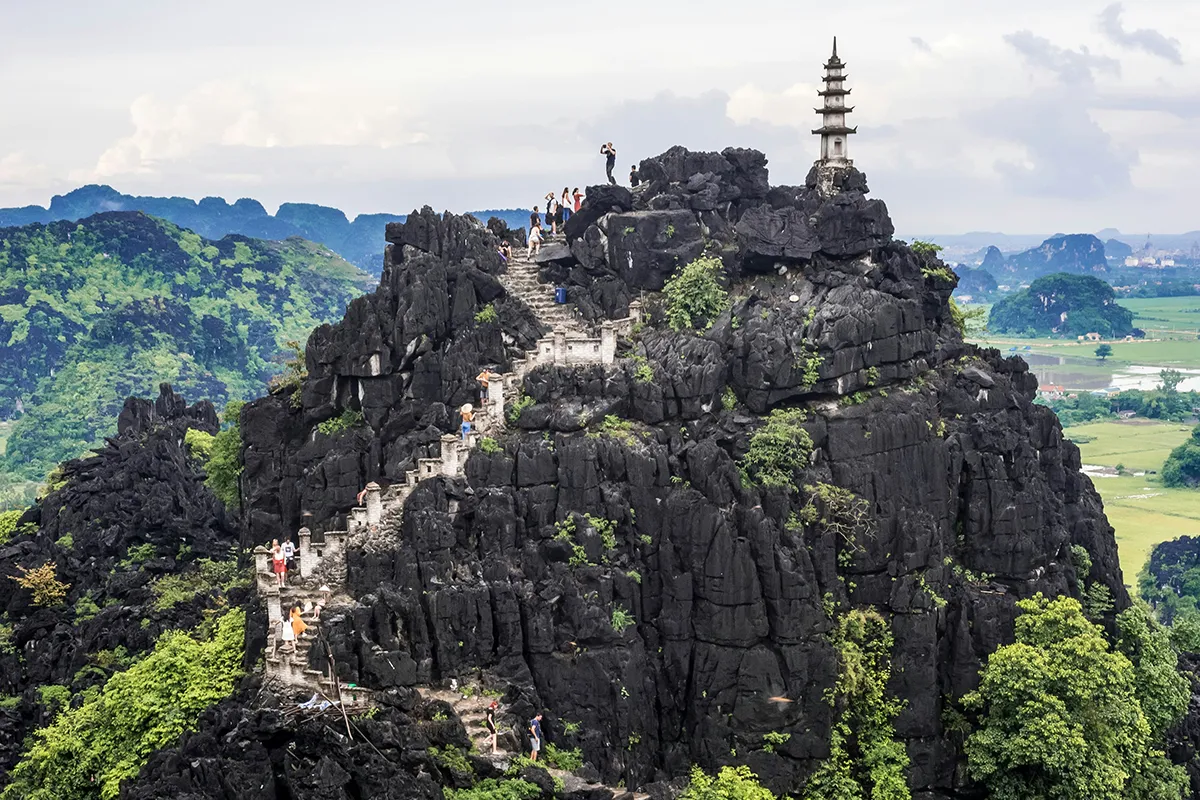
The famous Dragon Peak is one of the main reasons travelers visit Hang Mua. The upper route leads toward a narrow ridge where the stone dragon sculpture creates the iconic image most closely associated with Mua Cave.
As you approach this section, the stairs become steeper and the landscape opens dramatically around you. Take your time, particularly near the upper part of the route. The final section is more exposed than the lower staircase, so it is important to watch your footing and avoid getting unnecessarily close to edges for photographs.
The reward is a wide view over the Tam Coc valley, with the river, rice fields, villages and limestone peaks stretching into the distance.
Dragon Peak or the Other Viewpoint?
Near the upper section, the trail divides toward two different viewpoints. Choosing between them depends on what you want from your visit.
Dragon Peak
Dragon Peak is the most famous option because of the dramatic dragon sculpture positioned along the ridge. It is the best choice for travelers who want the classic Mua Cave photograph and the highest panoramic perspective.
The alternative upper viewpoint
The second viewpoint offers a different angle across the karst landscape and can feel more comfortable for travelers who are less confident on narrow or exposed sections.
You do not necessarily need to visit both. If your priority is the iconic photograph, focus your energy on Dragon Peak. If you prefer a different perspective or a less exposed route, the alternative viewpoint may be the better choice.
Best Viewpoints at Mua Cave
There are several good places to stop during the climb, so the best viewpoint depends on the type of scenery or photograph you want.
1. Dragon Peak
This is the signature viewpoint of Mua Cave. The stone dragon creates a dramatic foreground, while the Tam Coc valley stretches behind it. Because it is the most famous location, expect other visitors to be taking photographs here as well. Patience can make a big difference during busy periods.
2. The lower panoramic sections
You do not need to reach the summit to enjoy impressive scenery. As you climb, the river and rice fields gradually appear between the mountains. These intermediate sections can also be less crowded and are useful for travelers who want landscape photographs without the summit structures dominating the frame.
3. The alternative upper viewpoint
The second upper viewpoint offers a different perspective toward the dragon ridge and surrounding karst formations. It can be particularly interesting for photographers who want to capture the iconic dragon as part of the landscape.
Best Time to Visit Mua Cave
Timing can have a major impact on your experience. Ninh Binh can become hot and humid, and climbing several hundred stone steps around the middle of the day may feel considerably more difficult.
A good Mua Cave hiking guide should consider not only the trail itself but also the weather and time of day. Choosing cooler hours can make the climb more comfortable while giving you better conditions for photography.
Early morning
Early morning is one of the best times to start the Mua Cave hike. Conditions are generally more comfortable, the light is softer and you can complete the physically demanding part of your visit before the strongest heat.
Late afternoon
Late afternoon can also be excellent, especially for photography. The warmer light can create a more atmospheric view across the valley. However, make sure you leave enough time to descend safely before it becomes dark.
Mua Cave during rice season
For landscape photography, the appearance of the rice fields can add another dimension to the view. From above, the fields create patterns of green or golden color between the limestone formations.
However, the exact appearance of the fields depends on local farming conditions. Avoid planning around the assumption that the landscape will always have the same color on a particular date. Mua Cave remains visually impressive outside the famous golden rice period as well.
What to Bring for the Mua Cave Hike
- Water: Particularly important in hot weather.
- Comfortable shoes: Choose footwear with good grip.
- Sun protection: A hat, sunscreen and sunglasses can be useful.
- Light clothing: Breathable clothing is more comfortable in humid conditions.
- Camera: A wide-angle lens is useful for capturing the valley.
- Small towel: Helpful in hot and humid weather.
- Rain protection: A lightweight rain jacket can be useful during wet weather.
Keep your bag light. Carrying unnecessary equipment can make the climb noticeably more tiring.
Mua Cave Photography Tips
The famous Dragon Peak photograph is only one of many photography opportunities at Hang Mua.
- Use a wide-angle lens to capture the scale of the Tam Coc valley.
- Use a longer lens to photograph the Ngo Dong River winding between fields and limestone formations.
- Include people on the staircase or a small boat below to create a sense of scale.
- Look for intermediate viewpoints instead of photographing only from the summit.
- During sunrise or late afternoon, turn toward the illuminated valley for more detail in the landscape.
For stronger travel photographs, try to show the relationship between the people, the staircase and the enormous landscape around them. This helps communicate the scale that makes Mua Cave so memorable.
Practical Tips for a Safer Mua Cave Hike
Do not underestimate the combination of a long staircase and Ninh Binh’s weather. A climb that feels easy enough in cool conditions can become much more demanding under strong midday sun.
- Take regular breaks rather than trying to reach the summit as quickly as possible.
- Keep one hand free when using the railings.
- Avoid stopping in narrow sections where other visitors need to pass.
- Take extra care after rain because wet stone can become slippery.
- Consider postponing the climb if the weather is stormy or visibility is poor.
A safe and enjoyable visit is more important than reaching the highest point. Several sections along the route provide rewarding views, so there is no reason to force yourself beyond your comfort level.
How to Combine Mua Cave with Tam Coc
Mua Cave and Tam Coc are easy to combine because the two attractions are close to each other. Together, they offer two completely different perspectives of the same landscape: one from above and one from the water.
Option 1: Mua Cave first, Tam Coc later
Start with the Mua Cave hike in the morning, then continue to Tam Coc for a boat ride. This approach allows you to complete the most physically demanding activity before the strongest heat of the day.
Option 2: Tam Coc first, Mua Cave later
Take the Tam Coc boat ride first and visit Mua Cave in the late afternoon. This can work well for travelers who prefer warmer, more atmospheric light for photography, provided there is enough daylight for a safe descent.
Combining the two attractions gives you both an elevated panorama and the experience of traveling through the limestone landscape by traditional boat.
Combine Mua Cave with Tam Coc and Phat Diem
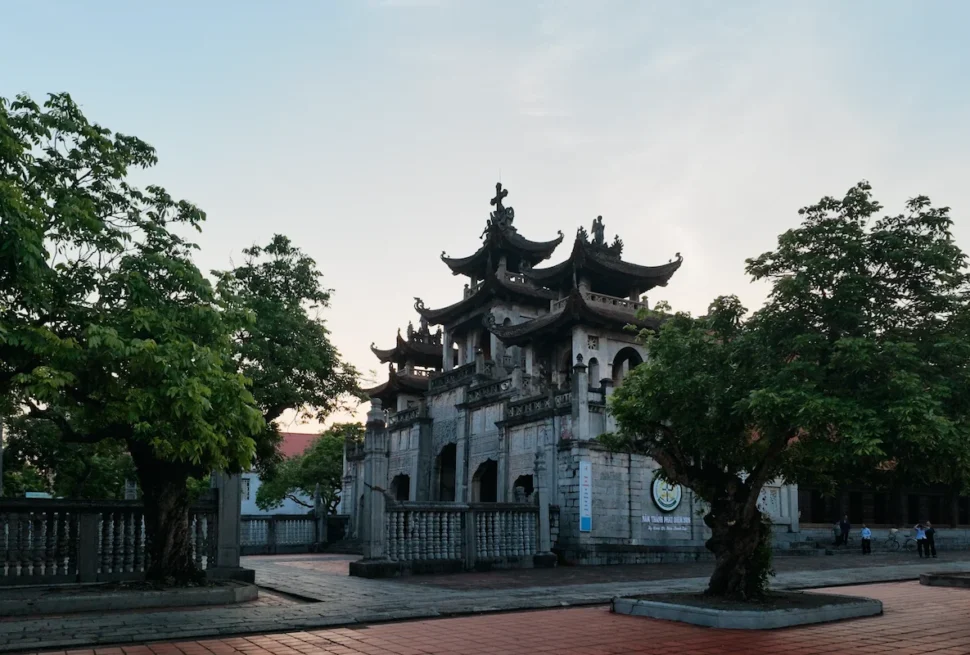
Travelers looking for a more varied Ninh Binh experience can combine Mua Cave or Tam Coc with Phat Diem Stone Cathedral. This creates a journey that connects panoramic natural scenery, river landscapes, rural countryside and the region’s distinctive Catholic architectural heritage.
Mua Cave is just one of many incredible places to experience in the region. Explore our complete Ninh Binh travel guide to discover more attractions, travel tips and ideas for planning your trip.
Mua Cave vs. Other Ninh Binh Experiences
Mua Cave is not the only way to experience the scenery of Ninh Binh, but it offers something that boat tours cannot: an elevated perspective over the entire landscape.
Tam Coc and Trang An allow visitors to travel through the limestone formations and waterways at ground level. Mua Cave, by contrast, reveals how the rivers, mountains, fields and villages fit together from above.
For travelers who do not want a steep climb, a boat tour may be the more comfortable option. For those with the time and fitness, combining a boat trip with Mua Cave provides a more complete experience of the region.
Frequently Asked Questions About Mua Cave
How many steps are there at Mua Cave?
Mua Cave is commonly described as having nearly 500 stone steps, although the exact count can vary between sources. What matters most for visitors is that the staircase is steep enough to require comfortable shoes, water and a steady pace.
Is Mua Cave difficult to climb?
The hike is moderate rather than technical. The biggest challenges are the steep staircase, heat and humidity. Most reasonably active travelers can complete the climb by taking regular breaks, while visitors with mobility or balance concerns may prefer to stop at a lower viewpoint.
What is the best time to visit Mua Cave?
Early morning and late afternoon are generally the most comfortable times. Temperatures are usually more manageable than around midday, and the softer light is better suited to photography.
Is Mua Cave worth visiting if I am not a strong hiker?
Yes. You do not have to reach the highest summit to enjoy the scenery. The route becomes progressively more challenging, but several lower sections offer attractive views across the limestone landscape.
Can I visit Mua Cave and Tam Coc on the same day?
Yes. The two attractions are close enough to combine in the same itinerary. A popular approach is to hike Mua Cave early and take the Tam Coc boat ride afterward, giving you both an aerial view of the valley and a traditional river experience.
Final Thoughts: Is the Mua Cave Hike Worth It?
For travelers who want one of the most dramatic viewpoints in Ninh Binh, the answer is yes. The Mua Cave hike requires some physical effort, but it does not require technical hiking experience. With good shoes, water, sensible timing and a steady pace, the climb is manageable for many active visitors.
Whether you reach Dragon Peak or decide to stop at a lower viewpoint, Hang Mua offers a memorable perspective over the limestone mountains, winding rivers and rice fields that define the Tam Coc landscape.