Ninh Binh is beautiful year-round, but the best time to visit Ninh Binh depends on what you want to see and do. Spring brings comfortable sightseeing conditions and beautiful countryside, late May to early June offers the most iconic rice-field scenery around Tam Coc, while autumn is a quieter and comfortable time for exploring by boat and bicycle.
By understanding the seasonal weather, rice-field conditions and visitor patterns, you can choose the right time for your trip and make the most of your time in Ninh Binh.
Quick Answer: When Is the Best Time to Visit Ninh Binh?
- Best overall: March to May for comfortable weather and beautiful countryside.
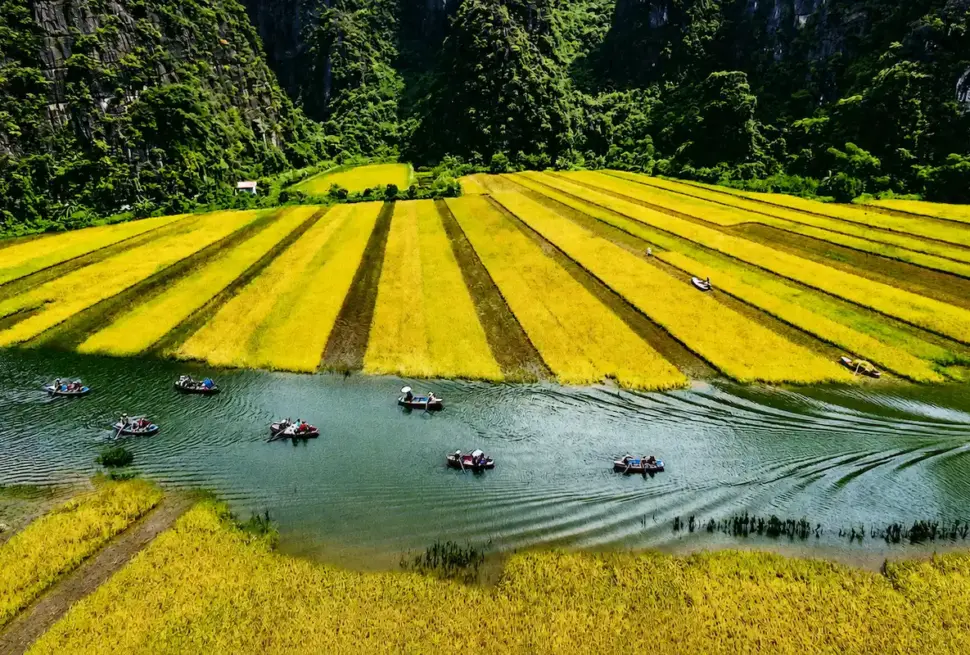
- Best for rice fields: Late May to early June, especially around Tam Coc.
- Best for water lilies: September and October, especially early morning at Tam Coc (from 7:00 to 9:30).
- Best for fewer crowds: September to November, with generally pleasant conditions.
- Best for cool weather: December to February, although mornings can be grey, misty or drizzly.
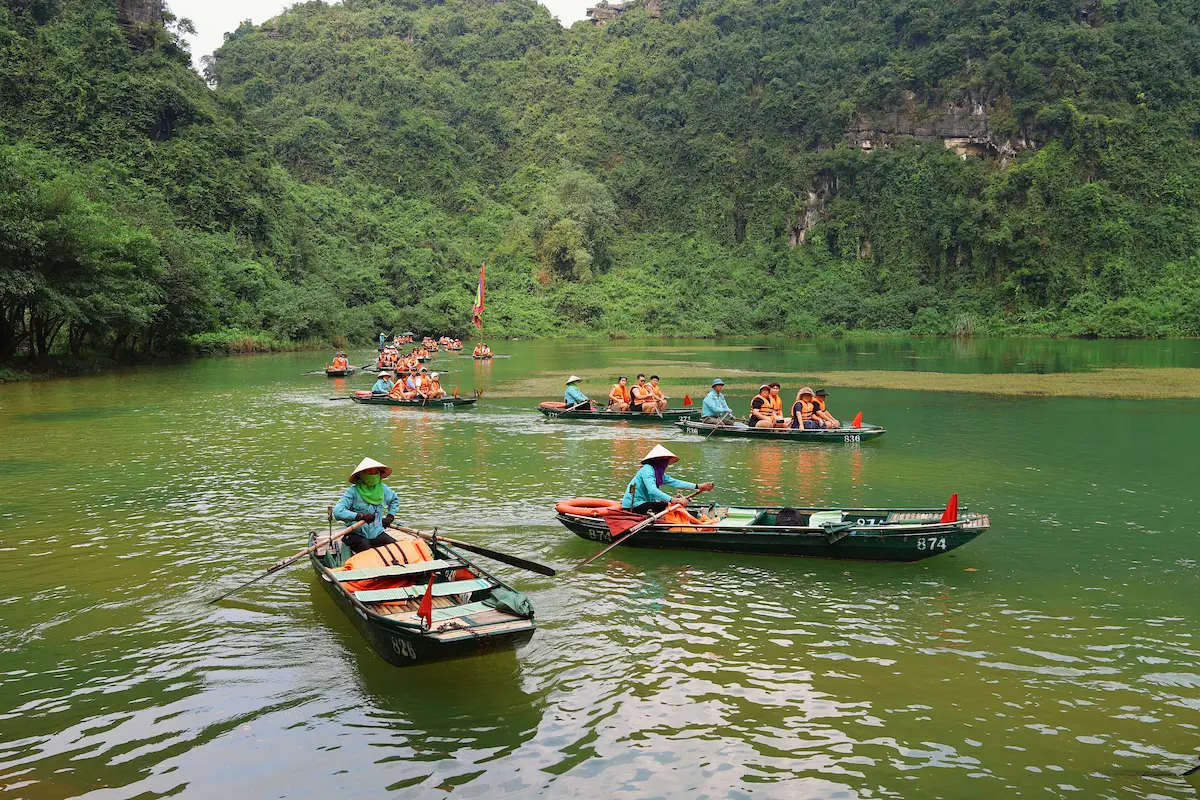
- Best time to visit Trang An: March to May and September to November.
- Best time to visit Tam Coc: Late May to early June for rice fields, or September and October for early-morning water lilies.
For more practical planning advice, start with our Ninh Binh Travel Guide, where you can explore more information about attractions, transportation and trip planning.
Best Time to Visit Ninh Binh at a Glance
For most travelers, the best time to visit Ninh Binh falls into two main periods: March to May and September to November. These months offer a useful balance between outdoor comfort, attractive scenery and manageable visitor numbers.
However, there are two seasonal highlights worth knowing about. If your main reason for visiting Ninh Binh is to see the famous rice fields along the Ngo Dong River in Tam Coc, late May to early June deserves special consideration. If you visit in September or October, you may also have the chance to see water lilies blooming along the river, particularly during an early-morning boat trip.

| Travel priority | Recommended period | Why visit? |
|---|---|---|
| Best overall | March–May | Comfortable conditions and beautiful countryside |
| Rice fields | Late May–early June | Iconic Tam Coc rice-field scenery |
| Water lilies | September and October | Morning blooms along the Ngo Dong River |
| Fewer crowds | September–November | A more relaxed atmosphere for outdoor activities |
| Cool weather | December–February | Cooler sightseeing conditions and atmospheric scenery |
Best Time to Visit Ninh Binh: A Month-by-Month Guide
March to May: The Best All-Round Season
For many international visitors, spring is one of the best times to travel to Ninh Binh. Temperatures are generally more comfortable than during the hotter summer months, making it easier to combine boat trips, temple visits, cycling and viewpoints in the same day.
March can still feel relatively cool, particularly in the morning, while April and May gradually become warmer. During this period, the countryside becomes increasingly green and the limestone mountains stand out beautifully against the surrounding fields.
Spring is particularly suitable for first-time visitors because you can comfortably combine several experiences in one day. For example, you could take a morning boat ride in Trang An, enjoy a local lunch, cycle through rice fields and villages, and finish the day at a scenic viewpoint.
Good to know: Spring can also be a busy period because of domestic travel, religious visits and major Vietnamese holidays. Weekends and public holidays may therefore be noticeably busier.
Late May to Early June: The Rice Field Season
For landscape lovers and photographers, late May to early June can be the best time to visit Tam Coc. During this period, the rice fields around the Ngo Dong River can create one of Ninh Binh’s most memorable landscapes, with vivid green or golden-yellow fields framed by dramatic limestone peaks.
The exact appearance of the rice fields changes from year to year depending on the agricultural calendar and local growing conditions. Therefore, there is no guaranteed single date when every field will look perfect.
Even so, this period is highly sought after because the combination of river, rice paddies and karst mountains is particularly photogenic. A boat trip through Tam Coc during the rice season can be one of the highlights of a northern Vietnam itinerary.
Planning around the rice fields? Check local conditions shortly before your trip rather than relying entirely on a fixed calendar date. The agricultural schedule can vary from year to year.
There is one trade-off: late spring can be hot, particularly around midday. For a more comfortable experience, start outdoor activities early and use the middle of the day for lunch, resting or activities that are less weather-dependent.
Visitors interested specifically in this scenery can also browse our Ninh Binh tours to see how the rice-field season can fit into a wider northern Vietnam itinerary.
September to November: Comfortable Weather, Fewer Crowds and Water Lilies
Autumn is another strong contender for the best time to visit Ninh Binh, especially for travelers who prefer a more relaxed atmosphere. September can still be warm, but it offers a special seasonal highlight at Tam Coc: water lilies blooming along the Ngo Dong River.
The water lilies are particularly beautiful in the early morning, when the flowers open and create a striking contrast against the river and surrounding limestone mountains. If you want to see and photograph them at their best, plan your Tam Coc boat trip for the early morning hours, as the flowers gradually close later in the day.
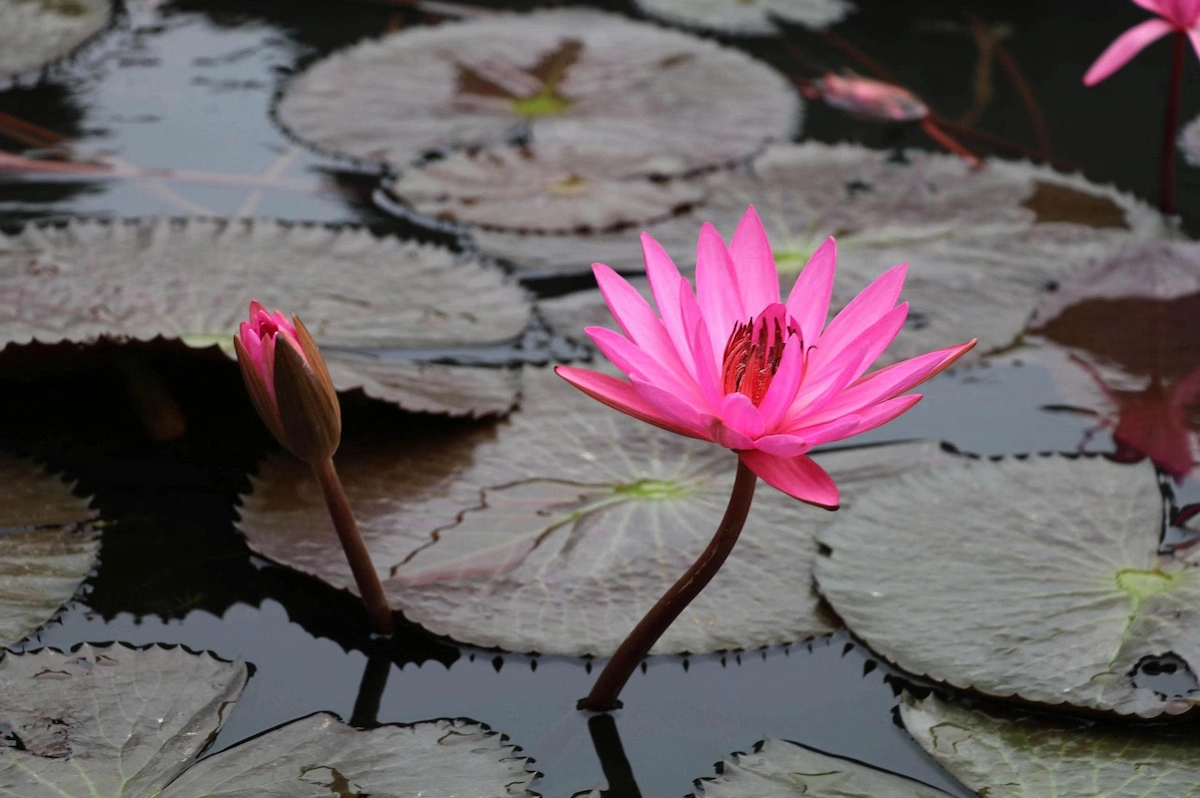
Photography tip: Visiting Tam Coc in September? Take an early-morning boat ride to increase your chances of seeing the water lilies in bloom. The flowers are a short-lived morning spectacle, so arriving early is essential.
October and November are often more comfortable for outdoor activities. The rice fields may not offer the same visual drama as the main Tam Coc harvest season, but the landscape remains attractive, and the cooler conditions are excellent for cycling and walking.
Another advantage of autumn is flexibility. With fewer peak-season visitors at certain times, you may find it easier to enjoy scenic viewpoints, village roads and boat routes at a calmer pace.
For travelers who value atmosphere rather than simply checking attractions off a list, autumn can therefore be an especially appealing time to explore Ninh Binh.
For more seasonal advice, itinerary ideas and practical recommendations, explore the other resources in our Ninh Binh Travel Guide.
What to Expect in Ninh Binh in Different Seasons
The best time to visit Ninh Binh can change depending on your tolerance for heat, photography goals and preference for quieter travel. Ninh Binh experiences a humid northern Vietnam climate, with noticeable differences between the cooler months and the hotter, wetter summer period.
December to February: Cool, Quiet and Atmospheric
Winter can be a surprisingly good time to visit Ninh Binh if you prefer cooler temperatures and a quieter atmosphere. Days are generally comfortable for cycling and sightseeing, although cloudy skies, mist and occasional drizzle are possible.
The landscape can look particularly atmospheric when mist settles around the limestone mountains. For photographers, these conditions can create a softer and more dramatic mood than the bright summer landscape.
The main disadvantage is that winter is not the ideal season for lush green rice fields. If your main goal is the classic Tam Coc rice-field panorama, consider visiting later in spring instead.
June to August: Hot, Green and Less Predictable
Summer brings intense greenery to Ninh Binh, but it also brings high temperatures, humidity and a greater chance of heavy rain. These conditions can make midday sightseeing uncomfortable, especially when climbing viewpoints such as Hang Mua.
However, summer should not automatically be ruled out. Early mornings can be excellent for boat trips and cycling, while rain can sometimes produce dramatic skies and fresh-looking landscapes.
If you visit during this period, build some flexibility into your itinerary in case weather affects outdoor activities.
Summer strategy: Schedule your most important outdoor experience early in the day and leave some time later for meals, cafés or other activities that are less weather-dependent.
Best Time to Visit Trang An vs. Tam Coc
When deciding between Tam Coc or Trang An, it is important to know that the best time to visit Trang An differs slightly from Tam Coc due to seasonal weather patterns. Trang An is celebrated for its majestic limestone scenery, karst caves, and serene waterways, while Tam Coc stands out for its scenic Ngo Dong river flanked by dramatic cliffs, golden agricultural rice fields, and vibrant water lily blossom seasons.
When to Visit Trang An
Trang An is a strong choice in spring and autumn, when temperatures are more suitable for spending several hours outdoors.
One advantage of Trang An is that its enclosed waterways and limestone cliffs remain impressive regardless of the season. You therefore do not need to time your visit around the rice harvest in the same way you might for Tam Coc.
Early morning is particularly rewarding because the light is softer and the waterways can feel calmer. Starting early also helps you avoid the hottest part of the day and, during busy periods, can reduce the amount of time spent in crowded areas.
When to Visit Tam Coc

The best time to visit Tam Coc depends heavily on your priorities.
Late May and early June are the standout period for travelers hoping to see the famous rice fields along the Ngo Dong River. If the rice-field landscape is your main reason for visiting Ninh Binh, this should be your first period to consider.
September and October offers a different seasonal experience: you may be able to see water lilies blooming along the Ngo Dong River. The flowers open in the early morning, so an early boat trip is the best way to experience this seasonal sight. Later in the day, the flowers gradually close.
For more comfortable weather without making the rice harvest or water lilies your central objective, March, April, and November are attractive alternatives.
Because agricultural schedules are not fixed to an exact date every year, travelers planning specifically around the rice fields should check local conditions shortly before their trip rather than relying entirely on a fixed calendar date.
How to Avoid Crowds in Ninh Binh
Even during the best time to travel to Ninh Binh, choosing the right day and time can make a significant difference to your experience.
The busiest periods are often associated with weekends, Vietnamese public holidays and popular daytime sightseeing hours.
- Start early: Begin your main attraction before the late-morning rush.
- Travel on weekdays: Weekdays are generally a better choice for a quieter experience.
- Avoid major holidays: Domestic travel increases significantly around important Vietnamese holidays.
- Allow flexibility: Weather and visitor levels can vary, so avoid packing every hour of your itinerary.
For travelers visiting from Hanoi, staying overnight in Ninh Binh can also make a significant difference. Instead of arriving with the main day-trip crowds, you can begin exploring early and experience the countryside at a slower pace.
Best Time of Day to Explore Ninh Binh
Choosing the right time of day can be almost as important as choosing the right month.
| Time of day | Best for | Why? |
|---|---|---|
| Early morning | Boat trips, water lilies, cycling and photography | Softer light, cooler conditions and potentially fewer visitors; September water lilies bloom in the morning |
| Late morning–midday | Lunch, rest and less weather-dependent activities | Can be hot, particularly in late spring and summer |
| Late afternoon | Cycling and viewpoints | More comfortable than midday and attractive for scenic views |
Practical Tips for Planning Your Ninh Binh Trip
What to Pack
Bring comfortable walking shoes, lightweight clothing, sunscreen, sunglasses and a hat.
During the rainy season, a compact rain jacket or umbrella is useful. During the cooler months, pack a light layer for early mornings, particularly if you plan to cycle or take a boat at the start of the day.
Plan Around Your Priorities
Do not try to visit every attraction simply because you are in Ninh Binh. A better approach is to choose one major boat experience, one cultural or historical site and one countryside activity each day.
For example, you might combine Trang An with Hoa Lu and a cycling route, or choose Tam Coc with Hang Mua and nearby villages.
This creates a more balanced itinerary and leaves enough time to enjoy the scenery rather than spending most of the day moving between stops.
For more inspiration, explore our Ninh Binh travel articles for additional ideas on attractions, itineraries and practical planning.
Consider Staying Overnight
A day trip from Hanoi is possible, but staying one or two nights in Ninh Binh gives you a better chance to experience the area before and after the busiest sightseeing hours.
Morning cycling, quiet village roads and sunset views are much easier to enjoy when you are already staying locally.
Frequently Asked Questions About the Best Time to Visit Ninh Binh
What is the best month to visit Ninh Binh?
April and May are among the best months to visit Ninh Binh for a combination of comfortable sightseeing conditions and beautiful countryside. Late May can be especially attractive if seeing the Tam Coc rice fields is a priority, although temperatures can be high.
When is the rice harvest in Ninh Binh?
The most famous Tam Coc rice-field scenery is typically associated with late May to early June. However, the precise timing varies according to local agricultural conditions, so travelers should check recent local information before booking specifically for the harvest.
Can you see water lilies in Tam Coc in September and October?
September and October can be a good time to see water lilies in Tam Coc. The flowers bloom along the Ngo Dong River and are best seen in the early morning, when they are open. They gradually close later in the day, so travelers hoping to photograph them should plan an early boat trip.
Is Ninh Binh worth visiting in the rainy season?
Yes. Ninh Binh can still be rewarding during the rainy season, particularly when the landscape is lush and green. The main consideration is unpredictability: heavy showers can temporarily disrupt outdoor activities, so flexible scheduling is recommended.
How many days should you spend in Ninh Binh?
Two days and one night is ideal for most first-time visitors. It allows enough time for a boat trip, major cultural attractions, countryside cycling and a viewpoint without turning the trip into a rushed checklist.
So, What Is the Best Time to Visit Ninh Binh?
The short answer: For most international travelers, March to May and September to November offer the best overall balance of weather, scenery and outdoor comfort.
Choose late May to early June if the Tam Coc rice fields are your top priority, or choose September if you would like the chance to see Tam Coc’s water lilies during an early-morning boat trip. Consider December to February if you prefer cooler temperatures and atmospheric landscapes.
There is no single perfect month for everyone. The right time depends on whether you value rice fields, water lilies, comfortable temperatures, quiet exploration or dramatic seasonal scenery.
Plan around your priorities, start outdoor activities early and allow some flexibility for the weather. With the right timing, Ninh Binh can be one of the most rewarding stops on a northern Vietnam itinerary.
Planning your Ninh Binh trip? Visit our Ninh Binh Travel Guide for more practical information, itinerary ideas and travel tips.